
Block-based programming has revolutionized how we introduce coding to learners, offering visual, intuitive approaches that unlock creative potential while building foundational computational thinking skills.

🎨 The Visual Revolution in Programming Education
The landscape of programming education has undergone a dramatic transformation over the past two decades. Traditional text-based coding, once the sole gateway into the world of software development, now shares the stage with an innovative alternative: block-based programming. This visual approach to coding has captured the imagination of educators, students, and parents alike, not merely as a simplified version of “real” programming, but as a powerful pedagogical tool that unlocks creativity in ways text-based coding often cannot.
Block-based programming environments like Scratch, Blockly, and Code.org’s visual interfaces have introduced millions of learners to computational thinking. These platforms replace intimidating lines of syntax with colorful, interlocking blocks that represent programming concepts. The result? A dramatic reduction in barriers to entry and an explosion of creative expression among learners who might otherwise never have discovered their potential as digital creators.
Understanding the Fundamental Differences
Before exploring why block-based programming excels in teaching essential skills, we must understand what distinguishes it from traditional text-based coding. Text-based programming requires learners to memorize syntax, understand abstract symbols, and type commands precisely. A single misplaced semicolon or bracket can halt program execution, creating frustration that often discourages beginners.
Block-based programming eliminates these syntactical obstacles. Commands are represented as visual blocks that physically snap together like puzzle pieces. This design ensures that only syntactically correct combinations are possible, allowing learners to focus on logic and problem-solving rather than memorizing punctuation rules. The visual nature also makes program flow immediately apparent, with nested structures and loops clearly visible through physical block arrangement.
The Cognitive Load Advantage
Cognitive load theory explains why block-based programming proves superior for beginners. When learning any complex skill, our working memory has limited capacity. Text-based coding demands simultaneous attention to syntax rules, language-specific commands, typing accuracy, and logical thinking. This overwhelming cognitive burden often leads to frustration and abandonment.
Block-based environments dramatically reduce extraneous cognitive load. By eliminating syntax memorization and typing errors, learners can dedicate their full mental capacity to understanding programming concepts themselves. This focused attention accelerates learning and allows creativity to flourish, as students aren’t constantly battling technical obstacles unrelated to their creative vision.
🚀 Unleashing Creative Expression Without Barriers
Creativity thrives when obstacles are removed and experimentation is encouraged. Block-based programming creates an ideal environment for creative exploration by making immediate results visible and iteration effortless. Students can drag blocks, test their code, observe outcomes, and modify their approach within seconds—a rapid feedback loop that fuels creative experimentation.
Consider a ten-year-old wanting to create an interactive story with animated characters. In text-based Python or JavaScript, this child would first need to learn basic syntax, understand variables and functions, master graphics libraries, and debug countless syntax errors. The creative vision would likely be abandoned long before any animation appears on screen.
With Scratch or similar platforms, that same child can begin animating sprites within minutes. The immediate gratification of seeing characters move, hearing sounds play, and watching their story unfold provides powerful motivation to continue learning. This success breeds confidence, and confidence fuels further creative exploration.
Visual Feedback and Iterative Design
The visual nature of block-based programming provides immediate, intuitive feedback about program structure. Students can literally see the logic flow through nested blocks and loops. When something doesn’t work as expected, the visual representation makes debugging more accessible. Rather than hunting through lines of text for a missing bracket, learners can examine the physical arrangement of blocks to identify logical errors.
This visual clarity encourages iterative design—a cornerstone of creative problem-solving. Students feel empowered to experiment, knowing they can easily modify block arrangements and test new approaches. This trial-and-error process, essential to developing computational thinking, becomes enjoyable rather than frustrating.
Building Essential Computational Thinking Skills
While creativity captures attention, the deeper value of block-based programming lies in how effectively it teaches computational thinking—the mental processes involved in formulating problems and expressing solutions in ways computers can execute. These skills transfer far beyond programming, enhancing logical reasoning, pattern recognition, and systematic problem-solving across all disciplines.
Decomposition: Breaking Problems into Manageable Pieces
Block-based programming naturally teaches decomposition—the ability to break complex problems into smaller, manageable components. The modular nature of blocks mirrors this process visually. Students learn to approach large projects by creating separate scripts for different characters or functions, then combining them into cohesive programs.
This skill proves invaluable across academic subjects and life situations. Whether outlining an essay, planning a science experiment, or organizing a group project, the ability to decompose complex challenges into smaller tasks is fundamental to success.
Pattern Recognition and Abstraction
As learners progress with block-based programming, they naturally begin recognizing patterns in their code. They notice when similar block sequences appear multiple times and learn to create custom blocks (functions) to encapsulate repeated logic. This transition from concrete implementation to abstract thinking represents sophisticated cognitive development.
Pattern recognition extends beyond programming. Students trained to identify patterns in code become better at recognizing patterns in mathematics, language structures, scientific phenomena, and social situations. This metacognitive skill—thinking about thinking—enhances learning across all domains.
🎯 Inclusivity and Accessibility in Programming Education
One of block-based programming’s most significant advantages is its inclusivity. Traditional text-based coding has historically excluded many learners due to various barriers: language difficulties, typing challenges, visual processing differences, and simply the intimidating appearance of code-filled screens.
Block-based environments welcome diverse learners. Students with dyslexia find visual blocks easier to process than text syntax. Those with fine motor challenges can drag and drop blocks more easily than typing precise commands. English language learners can focus on logic rather than wrestling with English-language keywords and error messages.
Age-Appropriate Entry Points
Block-based programming creates developmentally appropriate entry points for young learners. Children as young as five can begin programming with platforms like ScratchJr, manipulating colorful blocks to make characters move and interact. This early exposure builds computational literacy at a critical developmental stage, establishing foundations for more advanced learning later.
Text-based coding typically requires reading fluency, abstract thinking capabilities, and attention to detail that don’t fully develop until adolescence. By introducing programming through visual blocks during elementary years, we engage students during a period of rapid cognitive development when creative thinking and logical reasoning skills are forming.
The Myth of “Real” Programming
Critics sometimes dismiss block-based programming as “not real coding” or merely a stepping stone to “actual” programming languages. This perspective fundamentally misunderstands both the nature of computational thinking and the learning process itself. The concepts learned through block-based programming—loops, conditionals, variables, functions, event handling—are identical to those in text-based languages.
The difference lies not in what is learned, but in how cognitive resources are allocated during learning. Block-based programming allows learners to master computational concepts without simultaneously battling syntax rules. When students eventually transition to text-based languages, they bring robust conceptual understanding and problem-solving skills, making syntax acquisition far easier.
Transfer of Skills to Text-Based Languages
Research consistently demonstrates that skills learned through block-based programming transfer effectively to text-based coding. Students who master concepts visually can transition to Python, JavaScript, or other languages with surprising ease. They already understand loops, conditionals, and functions—they simply need to learn the text syntax for concepts they’ve already internalized.
More importantly, these students approach text-based coding with confidence. They’ve already created games, animations, and interactive stories. They think of themselves as programmers. This identity and self-efficacy prove more valuable than any head start on syntax memorization.
🌟 Real-World Creative Applications
Block-based programming isn’t confined to simple animations and games. Advanced platforms enable sophisticated creative projects that rival those built with text-based languages. Students use block-based tools to create:
- Interactive storytelling experiences with branching narratives
- Educational games that teach mathematics or science concepts
- Music composition tools with complex algorithmic patterns
- Data visualization projects that analyze real-world information
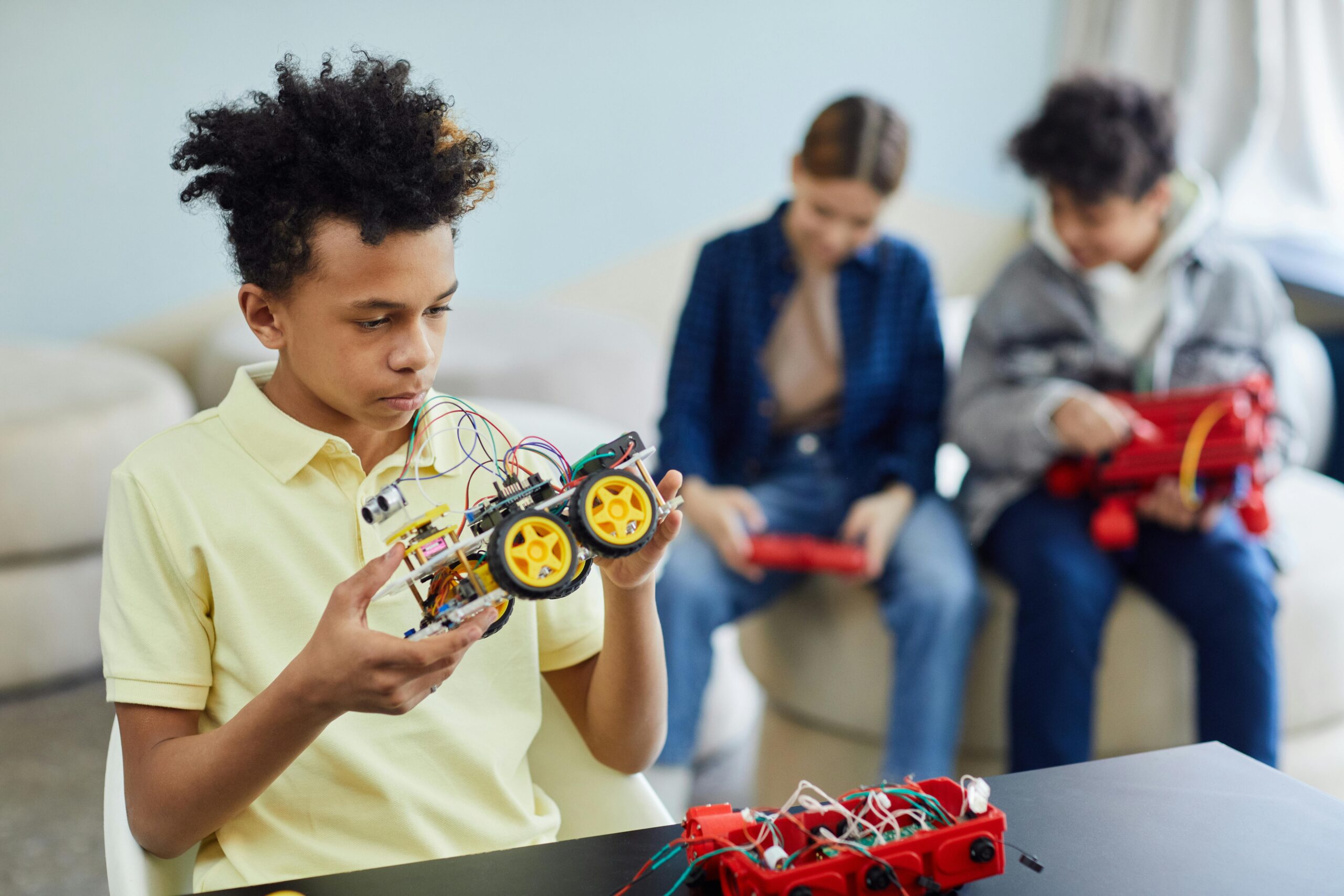
- Robotic control programs that bring physical devices to life
- Simulation models exploring scientific or social phenomena
These applications demonstrate that block-based programming supports genuine creative expression and problem-solving, not merely preparatory exercises for “real” coding later.
Fostering Collaboration and Communication
Block-based programming environments naturally promote collaboration. The visual nature of code makes it easily shareable and understandable by peers. Students can examine each other’s projects, understand the logic flow at a glance, and suggest improvements or modifications. This peer learning accelerates skill development and builds communication abilities.
Many block-based platforms include community features where learners share projects, remix each other’s work, and provide feedback. This collaborative ecosystem mirrors real-world software development practices while teaching digital citizenship, respectful communication, and the value of building upon others’ ideas with proper attribution.
Cross-Disciplinary Integration
The accessibility of block-based programming makes it ideal for integration across the curriculum. Mathematics teachers use it to visualize geometric concepts and algebraic functions. Science educators employ it for simulation modeling and data analysis. Language arts instructors incorporate it into interactive storytelling projects. Social studies classes use it to create historical simulations and cultural presentations.
This cross-disciplinary application reinforces that computational thinking isn’t confined to computer science—it’s a fundamental literacy for the 21st century, applicable across all fields of study and professional endeavors.
🔮 Preparing Students for an Uncertain Future
The rapid pace of technological change makes predicting future programming languages nearly impossible. Today’s popular text-based languages may be obsolete within a decade. However, the fundamental computational thinking skills taught through block-based programming remain constant. These transferable cognitive abilities—logical reasoning, systematic problem-solving, creative thinking, and pattern recognition—prepare students for careers and challenges we cannot yet imagine.
Block-based programming also teaches adaptability. As students progress through different platforms and eventually to text-based languages, they learn that programming concepts transcend specific tools. This metacognitive awareness—understanding the underlying principles rather than memorizing specific implementations—proves invaluable in a world of constant technological evolution.
Teacher Effectiveness and Classroom Management
From an educational implementation perspective, block-based programming offers practical advantages that enhance teaching effectiveness. Teachers need less technical expertise to guide students effectively. The visual nature of code makes assessment easier—educators can quickly scan projects to understand student thinking and identify misconceptions.
Classroom management improves because technical troubleshooting decreases dramatically. When syntax errors are impossible, teachers spend less time debugging student code and more time facilitating learning, asking probing questions, and encouraging creative exploration. This shift transforms the teacher’s role from technical support to cognitive coach.
💡 The Gateway to Lifelong Learning
Perhaps block-based programming’s greatest strength lies in its ability to inspire continued learning. By removing initial barriers and providing immediate creative success, it hooks learners who might otherwise never discover their interest in computing. This early positive experience creates a foundation for lifelong engagement with technology as creators rather than merely consumers.
Students who experience success with block-based programming develop growth mindsets around technology. They approach new tools and languages with confidence, knowing they can learn through experimentation and persistence. This attitude—that programming is something they can master—transforms their relationship with technology and expands their perception of possible future paths.
Balancing Visual and Text-Based Approaches
Recognizing block-based programming’s strengths doesn’t require rejecting text-based coding entirely. The most effective programming education pathways thoughtfully sequence learning experiences, beginning with visual blocks to build conceptual understanding and confidence, then gradually transitioning to text-based languages as learners develop fluency and seek more advanced capabilities.
Some platforms facilitate this transition by offering both block and text views of the same code, allowing students to see how their visual programs translate to traditional syntax. This bridging approach respects learners’ developmental progression while honoring their growing sophistication and desire for more professional tools.
Empowering the Next Generation of Creators
The ultimate measure of any educational approach is its impact on learners’ lives. Block-based programming succeeds not merely by teaching syntax or preparing students for computer science careers, but by unlocking creative potential and building essential thinking skills applicable across all domains. It democratizes access to computational thinking, welcoming diverse learners who bring varied perspectives and creative visions to digital creation.
As we prepare students for an increasingly digital world, the question isn’t whether block-based or text-based programming is “better” in some absolute sense. Rather, we must ask: which approach most effectively teaches essential skills while nurturing creativity, confidence, and continued learning? The evidence overwhelmingly supports block-based programming as the optimal entry point for most learners, providing foundations that support both immediate creative expression and long-term computational fluency.
By embracing visual programming tools, we’re not lowering standards or avoiding “real” coding—we’re strategically removing barriers that have historically limited who can become a programmer. We’re prioritizing concept mastery over syntax memorization, creative expression over rote learning, and inclusive access over exclusive gatekeeping. In doing so, we unlock human potential and prepare diverse learners to become the creative problem-solvers our world desperately needs.