Robots are no longer confined to science fiction or factory floors. They’re stepping into classrooms worldwide, transforming how students learn, play, and collaborate in educational environments.

🤖 The Dawn of Robotic Learning Companions
Educational technology has evolved dramatically over the past decade, but nothing quite compares to the excitement and engagement that robots bring to learning spaces. These mechanical educators aren’t replacing teachers; instead, they’re augmenting traditional instruction with interactive experiences that captivate digital-native students.
Modern educational robots range from simple programmable devices to sophisticated AI-powered assistants. They introduce concepts in computer science, engineering, mathematics, and language arts through hands-on interaction. When students program a robot to navigate an obstacle course or solve a puzzle, they’re applying theoretical knowledge to practical challenges.
The integration of robots into classroom games creates a dynamic learning environment where abstract concepts become tangible. Students don’t just read about sequencing or cause-and-effect relationships—they see their code execute in real-time, immediately understanding the consequences of their decisions.
Breaking Down the Technology Behind Educational Robots
Understanding the mechanics behind educational robots helps educators maximize their potential. Most classroom robots operate on block-based programming interfaces, making coding accessible even to young learners without prior experience. These visual programming languages remove syntax barriers while teaching fundamental computational thinking.
Sensors play a crucial role in interactive robot games. Light sensors, proximity detectors, and touch sensors enable robots to respond to their environment, creating unpredictable scenarios that require problem-solving and adaptation. This sensory feedback loop mirrors real-world engineering challenges, preparing students for STEM careers.
Connectivity features allow multiple robots to interact simultaneously, opening possibilities for team-based challenges. Students can program robots to communicate with each other, compete in races, or collaborate on complex tasks. This networked approach teaches both technical skills and social competencies.
Popular Educational Robot Platforms
Several robot platforms have gained traction in educational settings, each offering unique advantages. LEGO Mindstorms combines the familiarity of building blocks with sophisticated programming capabilities, making it suitable for middle and high school students. The platform’s modular design encourages creativity while teaching mechanical engineering principles.
Sphero robots offer a different approach with their spherical design and tablet-based programming. These rolling robots excel in creating dynamic classroom games where students program navigation patterns, compete in mazes, or simulate real-world scenarios like planetary exploration.
Dash and Dot robots cater to younger learners with colorful designs and intuitive programming apps. Their playful appearance reduces technology intimidation while delivering powerful learning experiences. These robots respond to voice commands, play music, and express emotions through lights and sounds.
Ozobot takes minimalist design to heart with tiny robots that follow drawn lines and respond to color codes. This low-tech entry point makes robotics accessible to early elementary classrooms with limited budgets, proving that transformative learning doesn’t require expensive equipment.
🎮 Gamification Strategies That Actually Work
Incorporating robots into classroom games requires thoughtful design that balances entertainment with educational objectives. The most effective approaches embed learning goals within engaging challenges that students want to complete.
Quest-based learning structures work exceptionally well with robots. Teachers create narrative frameworks where students progress through increasingly complex challenges. A space exploration theme might have students program robots to navigate asteroid fields, collect samples, or establish communication networks.
Competitive tournaments generate enthusiasm while teaching sportsmanship. Robot soccer matches, sumo wrestling competitions, or relay races motivate students to refine their code and collaborate with teammates. These events often become highlights of the academic year, with students voluntarily spending extra time perfecting their strategies.
Designing Inclusive Robot Games
The beauty of robot-based learning lies in its accessibility across different learning styles and abilities. Visual learners grasp concepts through watching robot movements. Kinesthetic learners benefit from physically building and manipulating devices. Auditory learners engage through discussions about problem-solving approaches.
Differentiation occurs naturally in robot activities. Advanced students tackle complex programming challenges while beginners master fundamental concepts. Teachers can assign different roles within teams—designer, programmer, documenter, tester—ensuring every student contributes meaningfully regardless of skill level.
Students with disabilities often find robots particularly engaging. Non-verbal students can express creativity through code. Those with motor challenges can participate fully since robots execute the physical tasks. This leveling effect promotes inclusion and celebrates diverse contributions.
Collaborative Learning Through Shared Robotic Challenges
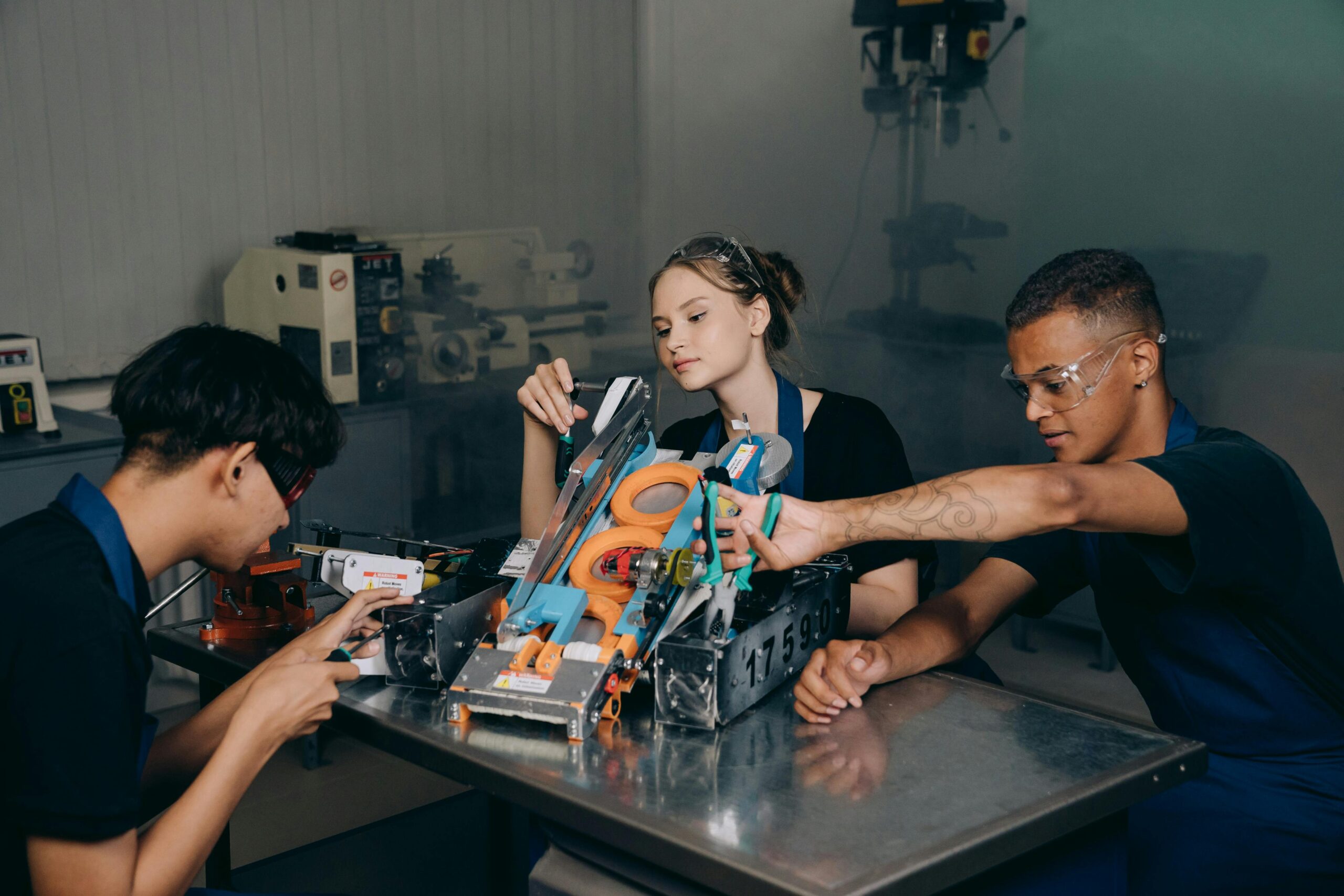
Perhaps the most valuable aspect of classroom robots is their ability to foster genuine collaboration. Unlike traditional group work where tasks can be divided and completed independently, robot projects require constant communication and collective problem-solving.
When a robot fails to complete its task, the entire team must analyze what went wrong. Did the sensors malfunction? Was the logic flawed? Did environmental factors interfere? This debugging process teaches resilience and systematic thinking while naturally developing communication skills.
Peer teaching flourishes in robotic learning environments. Students who quickly master one aspect of programming often struggle with another, creating opportunities for reciprocal teaching. The student who excels at loops might need help with conditionals, fostering an ecosystem of mutual support.
Building Communication Skills Through Code
Programming robots requires precise language and clear instructions. Students quickly learn that ambiguity leads to unexpected results. This lesson transfers to verbal and written communication, as learners recognize the importance of specificity and sequencing in all forms of instruction.
Documentation becomes essential when teams work on extended projects. Students must record their approaches, annotate code, and explain their reasoning to teammates and teachers. These technical writing skills prepare them for professional environments where clear documentation is critical.
📚 Cross-Curricular Applications That Surprise
While robots naturally fit into STEM subjects, creative educators find applications across the entire curriculum. Language arts teachers use robots to act out story sequences, teaching narrative structure through programmed scenes. Students write scripts and translate them into robot actions, reinforcing the connection between language and logic.
History lessons come alive when students program robots to reenact historical events. A robot representing a messenger might navigate a map of ancient trade routes, making geography and chronology tangible. Social studies units on government can use robots to demonstrate voting systems or resource distribution.
Art classes integrate robots to create kinetic sculptures or programmed paintings. When a robot holds a paintbrush and executes algorithms, students explore the intersection of creativity and technology. These projects challenge assumptions about what constitutes art and who—or what—can be an artist.
Mathematics finds endless applications in robotics. Geometry becomes essential for calculating turn angles. Algebra helps predict robot positions based on speed and time. Statistics emerge when students collect data on robot performance across multiple trials.
Overcoming Implementation Challenges
Despite their benefits, introducing robots into classrooms presents legitimate challenges. Budget constraints often top the list, as quality educational robots represent significant investments. Schools can start small with one or two units, rotate them among classes, or pursue grants specifically designated for STEM equipment.
Teacher training requires time and resources. Educators need not become expert programmers, but they should understand basic concepts and troubleshooting. Many robot manufacturers offer free professional development, online tutorials, and teacher communities that share lesson plans and solutions.
Classroom management shifts when introducing robots. Multiple moving devices create potential chaos without clear protocols. Successful implementations establish routines for robot distribution, charging, storage, and responsible use. These procedures become learning opportunities themselves, teaching organization and accountability.
Technical Support and Maintenance
Robots malfunction, batteries die, and software updates cause compatibility issues. Schools need systems for addressing technical problems quickly so instruction isn’t derailed. Designating student tech teams to handle basic troubleshooting builds leadership skills while reducing teacher burden.
Regular maintenance schedules prevent many problems. Charging stations, protective storage, and periodic inspections keep robots operational. Some schools assign robots to specific students or teams who assume responsibility for their condition, fostering ownership and care.
🌟 Measuring Learning Outcomes and Success
Assessing learning in robot-based activities requires methods beyond traditional tests. Performance-based assessments where students demonstrate robot functionality provide authentic evidence of understanding. Teachers observe problem-solving processes, not just final products.
Documentation portfolios capture learning journeys. Students record initial designs, challenges encountered, solutions attempted, and final results. This reflection process deepens understanding and creates artifacts that showcase growth over time.
Peer evaluation rubrics engage students in assessment. When teams evaluate each other’s robots based on criteria like creativity, functionality, and code efficiency, they develop critical thinking and analytical skills. These assessments often prove more rigorous than those imposed externally.
Long-Term Impact on Student Development
Research indicates that students who engage with educational robots show increased interest in STEM careers. More importantly, they develop transferable skills—persistence, logical thinking, collaboration—valuable across all professions. The confidence gained from successfully programming robots influences students’ self-perception as capable learners.
Girls and underrepresented minorities particularly benefit from gamified robot learning. The playful context reduces stereotype threat and provides success experiences that counteract societal messages about who belongs in technology. When robots are presented as creative tools rather than purely technical devices, participation barriers decrease.
Future Horizons: Where Robot Learning Is Heading
Artificial intelligence integration will personalize robot learning experiences. Future robots might assess individual student understanding and automatically adjust challenge difficulty. This adaptive learning could provide optimal challenge levels that keep all students in their zone of proximal development.
Virtual and augmented reality combinations will expand robot capabilities. Students might program physical robots while viewing additional information layers through AR glasses, or control virtual robot fleets that would be prohibitively expensive in physical form. These hybrid experiences could offer the best of tangible and digital learning.
Cloud-based programming environments will enable students to code robots from any location. Homework assignments might involve programming the classroom robot remotely, with students seeing results via live video feed. This flexibility extends learning beyond school walls and accommodates diverse schedules.
💡 Practical Tips for Getting Started Tomorrow
Educators eager to introduce robots needn’t wait for perfect conditions. Start with unplugged activities that teach programming concepts without devices. When students understand sequencing and loops through physical movement games, they’ll transition to robot programming more smoothly.
Partner with other teachers to share resources and expertise. A school-wide robot lending library maximizes investment value while creating opportunities for interdisciplinary projects. When the science teacher and art teacher collaborate on a robot project, students see connections between disciplines.
Invite community members with robotics experience to guest teach or mentor. Local engineers, university students, or high school robotics team members often welcome opportunities to share their passion. These connections expose students to potential career paths and build community engagement.
Document everything with photos and videos. When administrators and parents see student engagement and learning, they become advocates for program expansion. Evidence of success makes future funding requests more compelling and helps spread robot learning to other classrooms.
🚀 Transforming Education One Robot at a Time
The integration of robots into classroom games and collaborative learning represents more than a technological trend. It embodies a fundamental shift toward student-centered, active learning that prepares young people for an unpredictable future. When students program robots, they’re not just learning code—they’re developing problem-solving frameworks applicable to any challenge.
The robots themselves matter less than the pedagogical approaches they enable. These devices serve as catalysts for reimagining what education can be when students drive their own learning through play, experimentation, and collaboration. The excitement generated by robots creates momentum for deeper engagement with complex concepts.
As costs decrease and capabilities increase, educational robots will become as common as textbooks once were. The question facing educators isn’t whether to adopt robotic learning tools, but how to implement them most effectively. Those who embrace this revolution early position their students advantageously for a world where human-machine collaboration is standard.
Every student deserves opportunities to experience the joy of bringing an idea to life through code, watching a creation move according to their instructions, and solving problems alongside peers. Robots make these experiences accessible, engaging, and unforgettable. The revolution in education isn’t coming—it’s already here, rolling, beeping, and lighting up classrooms where teachers dare to innovate.