Robotics education is transforming classrooms worldwide, offering teachers innovative tools to engage students in hands-on learning experiences that build critical 21st-century skills.

🤖 Why Robotics Belongs in Every Modern Classroom
The integration of robotics into educational curricula represents more than just a technological trend—it’s a fundamental shift in how we prepare students for their future careers. Robotics lesson plans provide an interdisciplinary approach that seamlessly combines science, technology, engineering, arts, and mathematics (STEAM) into engaging, practical learning experiences.
Traditional teaching methods often struggle to maintain student engagement in our increasingly digital world. Robotics offers a compelling solution by transforming abstract concepts into tangible, interactive projects. When students program a robot to navigate a maze or complete a specific task, they’re not just learning coding—they’re developing problem-solving skills, logical thinking, and perseverance through trial and error.
Research consistently demonstrates that hands-on learning experiences significantly improve knowledge retention compared to passive learning methods. Robotics takes this principle to new heights by creating memorable learning moments where students become active creators rather than passive consumers of information.
Breaking Down Barriers: What Makes Robotics Lesson Plans Teacher-Friendly
Many educators hesitate to incorporate robotics into their classrooms, often citing concerns about technical expertise, preparation time, or budget constraints. However, modern teacher-friendly robotics lesson plans address these concerns head-on with thoughtfully designed resources that make implementation straightforward and stress-free.
Pre-Structured Curriculum Frameworks
The best robotics lesson plans come with complete curriculum frameworks that eliminate hours of preparation work. These comprehensive packages typically include detailed lesson objectives, materials lists, step-by-step instructions, assessment rubrics, and extension activities. Teachers can confidently introduce robotics without becoming experts themselves, as the curriculum guides them through each stage of the learning process.
Quality robotics programs also align with educational standards, making it easier for teachers to justify their inclusion and demonstrate how they support broader learning goals. Whether you’re working with Common Core State Standards, Next Generation Science Standards, or international curricula, well-designed robotics lesson plans show clear connections to required competencies.
Minimal Technical Prerequisites
Teacher-friendly robotics platforms are specifically designed for educational environments, meaning they prioritize user-friendliness over advanced technical features. Visual programming interfaces allow students to create complex robot behaviors by dragging and dropping code blocks rather than typing syntax-heavy commands. This approach makes robotics accessible to elementary students while still offering depth for older learners.
Many modern robotics solutions also feature intuitive setup processes that take minutes rather than hours. Wireless connectivity, rechargeable batteries, and durable construction mean less time troubleshooting and more time learning. Teachers don’t need computer science degrees to facilitate these lessons—just enthusiasm and willingness to learn alongside their students.
✨ Innovative Learning Structures That Transform Student Engagement
The structure of your robotics lessons dramatically impacts student engagement and learning outcomes. Moving beyond traditional teacher-centered instruction, innovative learning structures position students as active problem-solvers and collaborators.
Project-Based Learning Through Robotics Challenges
Project-based learning (PBL) naturally aligns with robotics education. Instead of isolated skills practice, students work toward completing meaningful challenges that require sustained effort and multiple competencies. A robotics project might task students with designing a robot that can assist elderly individuals with daily tasks, combining engineering design with empathy and real-world problem-solving.
These extended projects create opportunities for students to experience the complete design process: identifying problems, brainstorming solutions, prototyping, testing, refining, and presenting their work. This authentic learning experience mirrors professional engineering practices and helps students understand how classroom learning connects to real-world applications.
Collaborative Team Dynamics
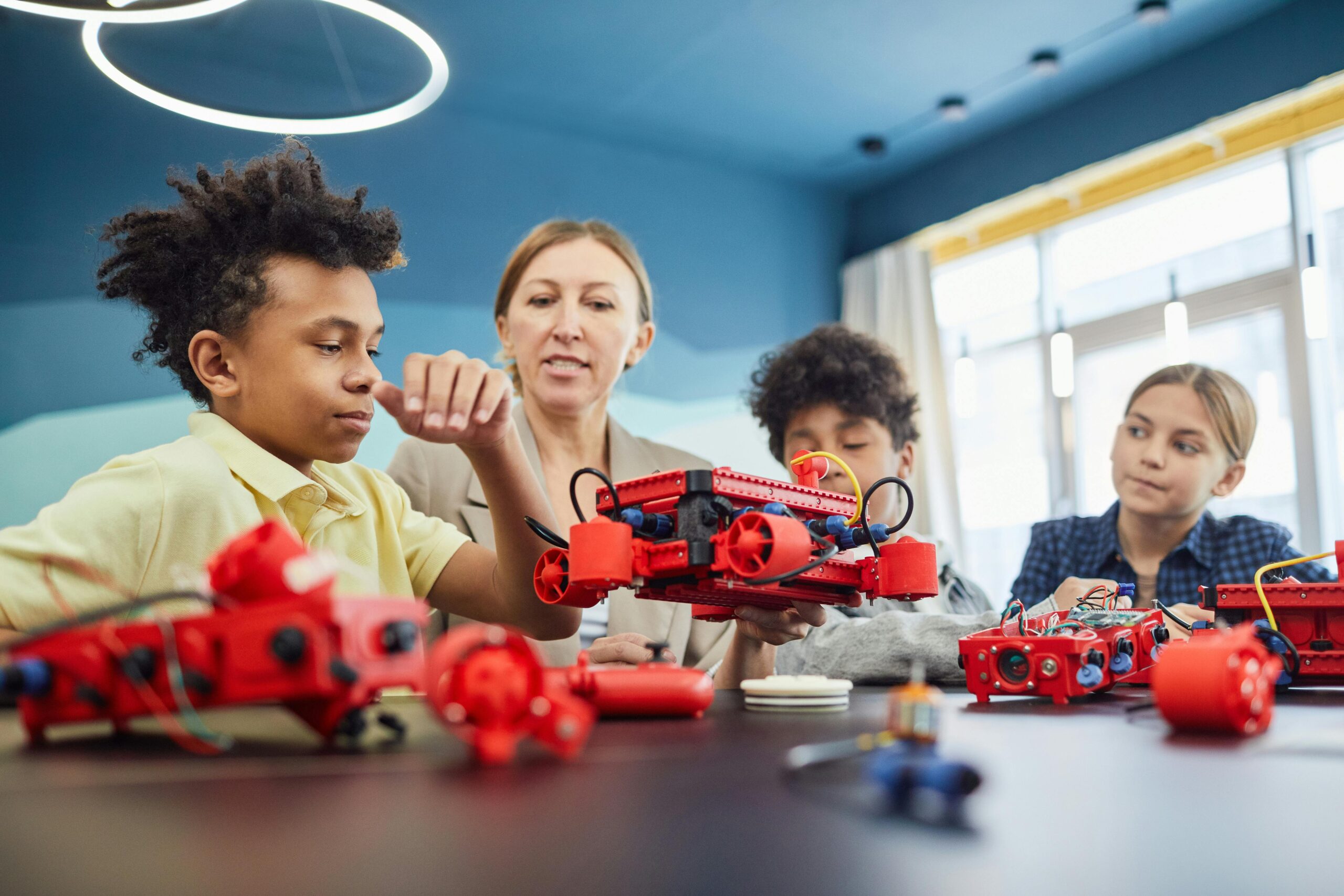
Robotics lesson plans typically incorporate structured teamwork that teaches students valuable collaboration skills. By assigning specific roles—such as programmer, builder, researcher, and documenter—teachers ensure all team members contribute meaningfully regardless of their technical confidence levels.
This collaborative structure also creates natural differentiation opportunities. Students with varying abilities can contribute in ways that match their strengths while being challenged to develop new skills. The programmer might help the builder understand the code’s logic, while the researcher guides the team’s strategic decisions based on their investigation.
Iterative Design and Growth Mindset Development
Robotics naturally teaches growth mindset principles because failure becomes a learning opportunity rather than an endpoint. When a robot doesn’t perform as expected, students must analyze what went wrong, adjust their approach, and try again. This iterative process normalizes mistakes as essential steps toward success.
Effective robotics lesson plans explicitly build reflection time into their structure, prompting students to document their challenges, solutions, and learning. These reflective practices help students recognize their own growth and develop metacognitive skills that transfer to other academic areas.
🎯 Essential Components of Effective Robotics Lesson Plans
Not all robotics lesson plans are created equal. The most effective ones share several key characteristics that maximize both teacher usability and student learning outcomes.
Clear Learning Objectives and Outcomes
Quality lesson plans articulate specific, measurable learning objectives that extend beyond “students will build a robot.” They identify the computational thinking skills, engineering principles, collaborative competencies, and content knowledge students will develop. These clear objectives help teachers facilitate purposeful learning rather than just entertaining activities.
Differentiation Strategies Built In
Classrooms contain diverse learners with varying preparation levels, interests, and learning styles. Teacher-friendly robotics lesson plans include built-in differentiation strategies such as:
- Extension challenges for advanced students who complete tasks quickly
- Scaffolded support materials for students who need additional guidance
- Multiple entry points that allow students to engage with concepts at appropriate complexity levels
- Alternative assessment options that honor different demonstration methods
- Flexible grouping strategies that optimize collaborative learning
Comprehensive Assessment Tools
Assessing robotics learning requires more than evaluating whether the robot works. Effective lesson plans include diverse assessment tools such as observation checklists, self-assessment rubrics, peer evaluation forms, and documentation portfolios. These varied approaches capture the full range of learning occurring during robotics activities, from technical skills to collaboration and creative problem-solving.
🚀 Getting Started: Implementation Strategies for Success
Successfully launching robotics in your classroom requires thoughtful planning and realistic expectations. These implementation strategies help ensure your robotics program starts strong and builds momentum over time.
Start Small and Scale Gradually
You don’t need to transform your entire curriculum overnight. Many successful programs begin with a single robotics unit or even just one introductory lesson. This manageable approach allows you to build confidence, understand your students’ needs, and identify what works in your specific context before expanding.
Consider starting with unplugged coding activities that introduce computational thinking concepts without requiring any technology. These foundational lessons prepare students for robotics work while you develop your own comfort level with the equipment and curriculum.
Leverage Available Resources and Communities
You’re not alone in this journey. Extensive resources exist to support teachers implementing robotics education, including online communities, professional development opportunities, and ready-made lesson plan libraries. Many robotics companies offer free curriculum materials, video tutorials, and teacher forums where educators share strategies and troubleshoot challenges together.
Professional learning networks on social media platforms connect you with thousands of educators implementing similar programs. These communities provide invaluable practical advice, lesson plan recommendations, and moral support when you encounter obstacles.
Establish Clear Classroom Management Systems
Robotics lessons involve equipment, movement, and excitement—a combination that requires thoughtful classroom management. Before your first lesson, establish clear protocols for:
- Distributing and collecting materials efficiently
- Appropriate noise levels during collaborative work
- Sharing limited resources among multiple teams
- Safe handling and storage of robotics equipment
- Transitioning between different activity phases
Teaching these procedures explicitly at the beginning saves countless hours of frustration and keeps the focus on learning rather than logistics.
💡 Real-World Applications That Inspire Student Motivation
Connecting robotics lessons to authentic real-world applications dramatically increases student engagement and helps them understand the relevance of their learning. When students see how the skills they’re developing connect to actual careers and societal challenges, their motivation intensifies.
Environmental Problem-Solving
Challenge students to design robots that address environmental issues such as ocean cleanup, reforestation, or monitoring air quality. These projects combine robotics skills with environmental science content while fostering civic responsibility and global awareness. Students might research existing environmental robots, identify limitations, and propose innovative improvements through their own designs.
Healthcare Innovation
Healthcare robotics represents one of the fastest-growing application areas. Lesson plans might explore surgical robots, rehabilitation devices, medication delivery systems, or robots that provide companionship to isolated individuals. These connections help students understand how engineering serves human needs and potentially inspires future healthcare innovators.
Agricultural Technology
Agricultural robotics addresses critical challenges in food production and sustainability. Students can explore how autonomous robots plant seeds, monitor crop health, harvest produce, or manage livestock. These applications connect particularly well with rural communities while teaching all students about food systems and sustainable practices.
🌟 Measuring Success Beyond Robot Performance
While getting the robot to work correctly matters, the deepest learning often occurs in less obvious areas. Comprehensive assessment of robotics education captures growth across multiple dimensions.
Computational Thinking Development
Track how students progress in breaking down complex problems into manageable steps, recognizing patterns, abstracting key information, and designing algorithms. These computational thinking skills transfer far beyond robotics into mathematics, writing, scientific inquiry, and everyday problem-solving.
Collaboration and Communication Skills
Document how students improve at articulating ideas, actively listening, managing disagreements constructively, and distributing work equitably. Robotics provides authentic contexts for developing these essential interpersonal skills that employers consistently identify as critical workplace competencies.
Persistence and Resilience
Observe how students’ responses to challenges evolve throughout robotics units. Do they give up more quickly or persist longer when encountering obstacles? Can they identify multiple solution strategies rather than fixating on a single approach? These indicators of developing resilience may represent the most valuable outcomes of robotics education.
🔧 Selecting the Right Robotics Platform for Your Classroom
Numerous robotics platforms exist, each with distinct advantages for different contexts. Understanding key selection criteria helps you choose options that match your students’ needs and your instructional goals.
Age Appropriateness and Learning Progression
Different platforms target specific age ranges with appropriate complexity levels. Elementary students benefit from robotics kits with large, easy-to-manipulate components and simple visual programming interfaces. Middle school students can handle more sophisticated builds and transitional programming languages that bridge visual and text-based coding. High school students might work with advanced platforms that use industry-standard programming languages and complex sensors.
Curriculum Integration Potential
Consider how well different robotics platforms support your broader curriculum goals. Some excel at teaching pure computer science concepts, while others facilitate science investigations through data collection sensors, or support mathematics learning through measurement and geometry challenges. Select platforms that create meaningful connections to your required content rather than treating robotics as isolated enrichment.
Budget and Sustainability Considerations
Initial purchase price represents just one budget factor. Also consider the durability of components, availability of replacement parts, software licensing costs, and whether the platform can grow with students across multiple years. Sometimes investing more initially in robust, versatile systems proves more cost-effective than repeatedly replacing cheaper options that break easily or become limiting.
🎓 Professional Development: Empowering Yourself as a Robotics Educator
Your own learning journey significantly impacts how effectively you facilitate student learning in robotics. Fortunately, abundant professional development opportunities exist for educators at all experience levels.
Many robotics companies offer free online courses that teach both technical skills and pedagogical strategies specific to their platforms. These courses typically include video demonstrations, practice activities, and community forums where you can ask questions and share experiences with other educators.
Local universities, science centers, and educational service agencies often host in-person robotics workshops where you can experience hands-on learning while networking with nearby colleagues. These face-to-face opportunities allow you to explore equipment before making purchasing decisions and build local support networks.
Consider attending robotics competitions as an observer before involving your students. Events like FIRST Robotics competitions showcase what students can achieve while demonstrating effective coaching strategies and team dynamics. These observations provide inspiration and practical ideas you can adapt to your classroom context.
Building Long-Term Program Sustainability
Creating a sustainable robotics program requires thinking beyond individual lessons to develop a comprehensive vision that persists across years and classroom changes.
Document your robotics curriculum thoroughly, including lesson plans, material lists, troubleshooting guides, and student work examples. This documentation becomes invaluable when training new teachers, justifying program continuation to administrators, or applying for grants to expand your program.
Engage parents and community members as robotics program supporters. Host showcase events where students demonstrate their learning and explain their projects. These celebrations build community awareness and often lead to donations of equipment, volunteer mentors with technical expertise, or connections to local businesses that might sponsor your program.
Develop student leadership opportunities within your robotics program. Older students can mentor younger learners, helping with setup, troubleshooting, and encouragement. This peer mentorship structure reduces teacher workload while providing valuable leadership experiences for advanced students and creating a positive program culture.
Transforming Education Through Accessible Innovation
Robotics education represents far more than adding technology to classrooms—it fundamentally reimagines how students engage with learning. Teacher-friendly robotics lesson plans remove traditional barriers that prevented many educators from accessing this powerful instructional approach, making innovative, engaging learning experiences available to diverse students across varied contexts.
The structured, comprehensive nature of quality robotics curriculum materials means you don’t need extensive technical backgrounds to facilitate transformative learning. You need curiosity, willingness to learn alongside students, and commitment to creating engaging educational experiences that prepare young people for their futures.
As you implement robotics in your classroom, remember that perfection isn’t the goal—progress is. Your first robotics lesson might include technical glitches, timing miscalculations, or unexpected student responses. These challenges represent learning opportunities that help you refine your approach and develop expertise over time.
The students you teach today will enter careers that don’t yet exist, solving problems we haven’t yet identified, using technologies not yet invented. Robotics education builds the adaptable thinking, collaborative skills, and confident problem-solving abilities they’ll need to thrive in that uncertain future. By bringing teacher-friendly robotics lesson plans into your classroom, you’re not just teaching technology—you’re empowering the innovators, leaders, and problem-solvers who will shape tomorrow’s world. 🚀