Design thinking is transforming how students approach robotics, blending innovation with practical problem-solving to create projects that truly matter in today’s technology-driven world.

🚀 The Intersection of Design Thinking and Robotics Education
The robotics landscape in educational environments is experiencing a fundamental shift. Traditional approaches that focused solely on technical assembly and programming are giving way to methodologies that prioritize human-centered design, creative exploration, and iterative development. Design thinking has emerged as the catalyst for this transformation, offering students a structured yet flexible framework to tackle complex challenges while building sophisticated robotic systems.
This paradigm shift recognizes that successful robotics projects require more than technical proficiency. Students must develop empathy for end users, think critically about real-world applications, and embrace failure as a learning opportunity. By integrating design thinking principles into robotics curricula, educators are preparing students not just to build machines, but to create meaningful solutions that address authentic problems in their communities and beyond.
Understanding Design Thinking’s Core Principles 🎯
Design thinking operates on five fundamental stages that guide students from initial problem identification through final implementation. These stages—empathize, define, ideate, prototype, and test—create a cyclical process that encourages continuous improvement and innovation. In robotics education, this framework transforms abstract concepts into tangible learning experiences.
The empathize stage challenges students to step outside their own perspectives and understand the needs of potential robot users. Whether designing a robot to assist elderly individuals with daily tasks or creating an autonomous system for environmental monitoring, students must conduct interviews, observe behaviors, and immerse themselves in the context where their solution will function.
During the define phase, students synthesize their research findings into clear problem statements. This critical step prevents teams from jumping to solutions before fully understanding the challenge. A well-crafted problem statement in robotics education might address mobility limitations, educational accessibility, or sustainability concerns—each requiring distinct approaches and technologies.
The Ideation Process in Robotics Classrooms
Ideation represents the most visibly creative phase of design thinking. Here, students engage in brainstorming sessions where quantity trumps quality initially, and wild ideas are celebrated rather than dismissed. In robotics contexts, this might involve sketching dozens of mechanical designs, proposing unconventional sensor configurations, or reimagining how robots could interact with their environments.
Successful ideation sessions in student robotics projects often incorporate techniques like SCAMPER (Substitute, Combine, Adapt, Modify, Put to another use, Eliminate, Reverse), mind mapping, and rapid sketching. These methods help students break free from conventional thinking patterns and explore truly innovative solutions that might otherwise remain undiscovered.
Prototyping: Where Ideas Meet Reality 🔧
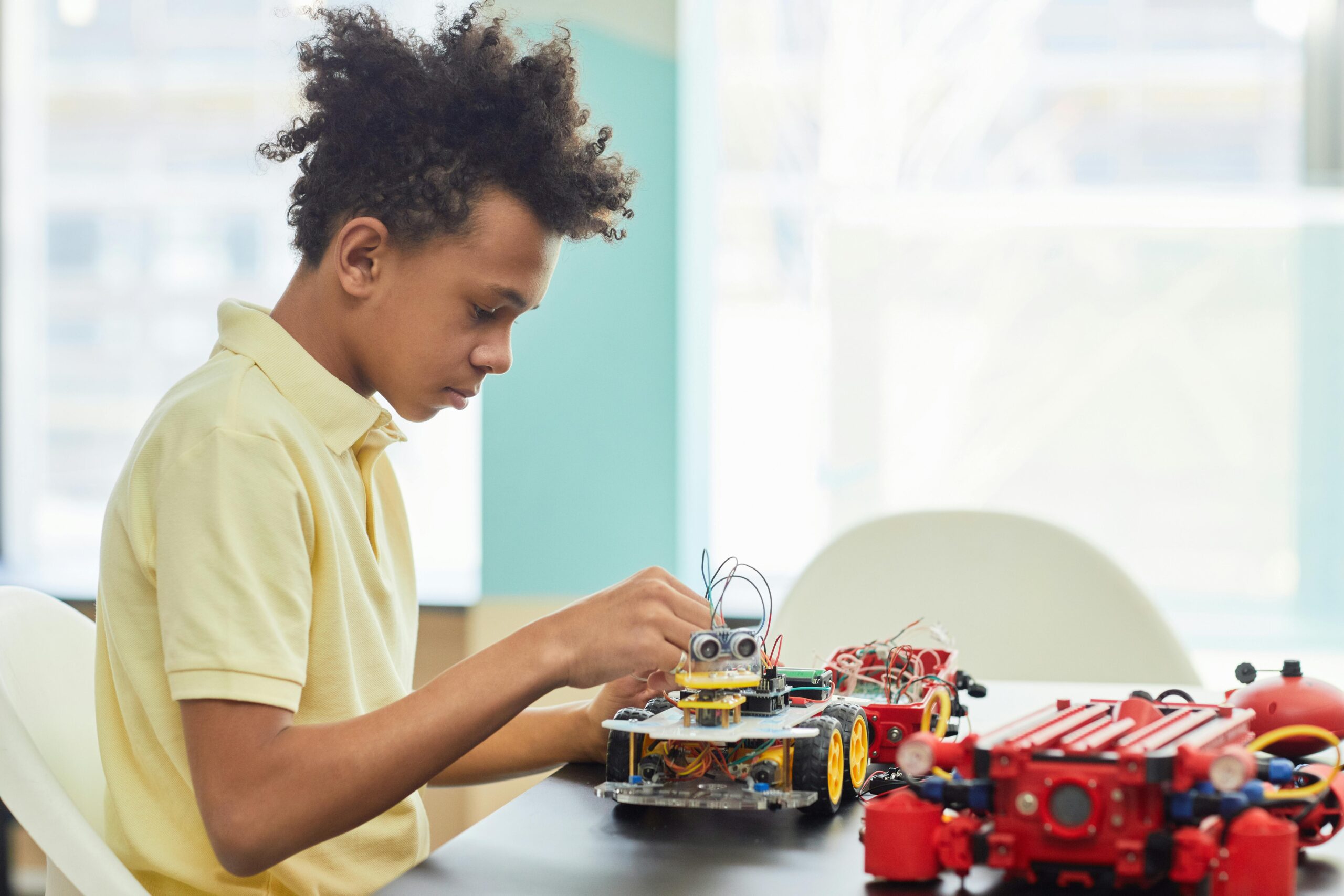
The prototyping stage transforms conceptual designs into physical or digital models that can be tested and refined. In robotics education, this phase holds particular significance because it bridges theoretical understanding with practical engineering skills. Students learn that prototypes don’t need to be perfect—they need to be informative.
Low-fidelity prototypes might consist of cardboard mockups, simple sketches, or basic programming flowcharts. These early versions allow teams to test fundamental concepts quickly and inexpensively before committing resources to more sophisticated builds. As ideas prove viable, students progress to higher-fidelity prototypes incorporating motors, sensors, microcontrollers, and increasingly complex programming logic.
Modern prototyping tools have democratized access to robotics development. Platforms like Arduino, Raspberry Pi, and LEGO Mindstorms provide accessible entry points for students at various skill levels. Meanwhile, 3D printing technology enables rapid fabrication of custom components, allowing student teams to iterate through multiple design versions within days rather than weeks.
Testing and Iteration Cycles
Testing represents the validation phase where prototypes meet real-world conditions. Student robotics teams conduct user testing sessions, gather feedback, and observe how their creations perform against initial success criteria. This stage often reveals unexpected insights—a robot might technically function perfectly but prove intimidating to its intended users, or a clever programming solution might create unintended side effects.
The iterative nature of design thinking ensures that testing isn’t a final checkpoint but rather a continuous loop of refinement. Students learn to embrace constructive criticism, analyze failure points systematically, and make data-driven improvements. This resilience-building aspect of the methodology prepares students for professional environments where projects rarely succeed on the first attempt.
Real-World Student Robotics Success Stories 🌟
Across educational institutions worldwide, design thinking has catalyzed remarkable student robotics achievements. At a high school in California, students applied design thinking principles to develop a robot that assists teachers with classroom management tasks. Through extensive interviews with educators, the team identified that distributing materials and monitoring group work consumed valuable instructional time. Their solution—a semi-autonomous robot equipped with storage compartments and simple interaction capabilities—demonstrated how empathy-driven design could address authentic workplace challenges.
In Singapore, a middle school robotics team tackled food waste using design thinking methodology. After researching composting challenges in urban environments, students designed a robotic system that sorts organic waste, monitors decomposition conditions, and alerts users when compost is ready. The project exemplified how design thinking encourages students to address complex environmental issues through technological innovation.
A university engineering program in Germany implemented design thinking across its robotics curriculum with striking results. Students working on assistive technology projects spent weeks observing and interviewing individuals with mobility impairments before designing solutions. This empathy-building phase led to innovations like a robotic companion that anticipates user needs based on behavioral patterns—a feature that emerged directly from understanding daily challenges faced by end users.
Implementing Design Thinking in Your Robotics Program 📚
Educators seeking to integrate design thinking into robotics curricula should start by restructuring project timelines to accommodate the methodology’s iterative nature. Traditional semester-long projects that culminate in a single final presentation should give way to cycles of rapid prototyping, testing, and refinement. Allocating time for each design thinking stage ensures students don’t rush through critical phases like empathy research or ideation.
Creating a physical environment that supports design thinking is equally important. Flexible classroom spaces with movable furniture facilitate collaboration during brainstorming sessions. Dedicated prototyping areas equipped with tools, materials, and robotics components encourage hands-on experimentation. Display spaces for work-in-progress projects foster a culture where iteration and improvement are visible and celebrated.
Assessment Strategies for Design Thinking Projects
Evaluating student work in design thinking-based robotics projects requires moving beyond traditional metrics focused solely on technical functionality. Comprehensive assessment frameworks should consider:
- Depth and quality of empathy research conducted with potential users
- Clarity and insight demonstrated in problem definition statements
- Creativity and breadth of ideas generated during ideation phases
- Willingness to iterate based on testing feedback and failures
- Technical execution and sophistication of final robotic systems
- Effectiveness of communication through presentations and documentation
Portfolio-based assessment allows students to document their entire design thinking journey, showcasing how their understanding evolved from initial research through multiple prototype iterations. This approach values the learning process as much as the final product, encouraging students to take creative risks without fear that early failures will negatively impact their grades.
Overcoming Common Challenges and Obstacles 💪
Implementing design thinking in robotics education isn’t without challenges. Students accustomed to traditional instruction may initially resist the methodology’s open-ended nature, seeking clear right answers rather than embracing ambiguity. Educators can address this by modeling comfort with uncertainty, celebrating creative risks, and sharing stories of how professional engineers and designers work through similar processes.
Time constraints present another significant obstacle. Design thinking’s iterative approach requires substantial time investment, potentially conflicting with packed curricula and standardized testing schedules. Strategic solutions include integrating design thinking across multiple subjects, extending projects beyond single semesters, or focusing on shorter design sprints that still capture the methodology’s essential elements.
Resource limitations can hinder prototyping capabilities, particularly in underfunded schools. However, design thinking principles can be applied with minimal materials. Cardboard, recycled components, and free software platforms enable meaningful prototyping experiences. Grant programs, corporate partnerships, and crowdfunding initiatives can supplement budgets for more advanced robotics components as programs mature.
Technology Tools Supporting Design Thinking in Robotics 🛠️
Digital tools have expanded possibilities for design thinking implementation in robotics education. Computer-aided design software allows students to create detailed models before physical construction, reducing material waste and enabling rapid iteration. Programs like Tinkercad, Fusion 360, and Onshape offer student-friendly interfaces with powerful capabilities for designing robot components and assemblies.
Simulation environments provide virtual testing grounds where students can experiment with robot behaviors without physical hardware constraints. Platforms like Gazebo, Webots, and CoppeliaSim enable testing of navigation algorithms, sensor configurations, and mechanical designs in realistic virtual environments. These tools prove especially valuable when working with potentially dangerous scenarios or expensive components.
Collaboration platforms facilitate team communication and documentation throughout design thinking processes. Digital whiteboarding tools support remote ideation sessions, while project management software helps teams organize tasks, track iterations, and maintain design documentation. These technologies prepare students for professional engineering environments where distributed collaboration is increasingly common.
Building Empathy Through User-Centered Robotics 🤝
The empathy stage of design thinking distinguishes truly innovative robotics projects from technically impressive but ultimately irrelevant creations. Teaching students to develop genuine empathy for users requires structured activities that push beyond surface-level observations. Shadowing exercises, where students spend extended time with potential users, reveal unarticulated needs and pain points that interviews alone might miss.
Creating empathy maps helps students organize and synthesize research findings. These visual tools capture what users say, think, feel, and do, revealing contradictions between stated preferences and actual behaviors. In robotics contexts, empathy maps might uncover that while users claim to want fully autonomous systems, they actually prefer maintaining some level of control and oversight.
Role-playing activities place students directly in users’ situations, building emotional understanding alongside intellectual knowledge. When designing assistive robotics, students might navigate their school using wheelchairs or complete daily tasks while simulating visual impairments. These experiences create lasting impressions that inform design decisions throughout project development.
Fostering a Culture of Creative Experimentation 🎨
Design thinking thrives in educational environments that celebrate experimentation and normalize failure as a learning tool. Establishing this culture requires intentional effort from educators, administrators, and students themselves. Sharing stories of famous failures that preceded breakthrough innovations helps students understand that setbacks are inherent to creative processes.
Implementing “failure walls” where teams publicly display unsuccessful prototypes and lessons learned destigmatizes mistakes and encourages risk-taking. These displays demonstrate that failure is not only acceptable but expected and valuable. Over time, students develop resilience and growth mindsets that serve them well beyond robotics classrooms.
Celebration events showcasing work-in-progress rather than only polished final products reinforce that learning occurs throughout design thinking processes. Mid-project exhibitions where students present prototypes, discuss challenges, and solicit feedback create opportunities for cross-pollination of ideas and foster supportive learning communities.
Preparing Students for Future Innovation Landscapes 🔮
The skills students develop through design thinking-based robotics education extend far beyond technical competencies. Employers increasingly value creative problem-solving, collaboration, adaptability, and human-centered thinking—precisely the capabilities that design thinking cultivates. Students who master these methodologies enter workforce environments prepared to tackle complex, ambiguous challenges across industries.
The interdisciplinary nature of design thinking in robotics mirrors professional innovation environments where diverse teams collaborate on multifaceted problems. Students learn to communicate across disciplines, integrating mechanical engineering with programming, user experience design with electronics, and project management with creative ideation. These experiences prepare them for careers in emerging fields like human-robot interaction, autonomous systems development, and assistive technology design.
As artificial intelligence and automation transform employment landscapes, uniquely human capabilities like empathy, creativity, and ethical reasoning become increasingly valuable. Design thinking-based robotics education develops precisely these competencies, positioning students as creators and ethical stewards of technology rather than passive consumers or displaced workers.
Measuring Impact and Demonstrating Value 📊
Documenting the impact of design thinking in robotics education helps justify program investments and inspire broader adoption. Quantitative metrics might include increases in student engagement, improvements in problem-solving assessments, or growth in participation rates for robotics competitions and programs. Tracking alumni career paths and university admissions provides longer-term evidence of program effectiveness.
Qualitative data offers equally compelling insights into design thinking’s transformative potential. Student testimonials, reflective journals, and portfolio artifacts reveal how the methodology shapes thinking processes and builds confidence. Teachers report observing students taking greater ownership of their learning, persisting through challenges with increased resilience, and demonstrating deeper understanding of real-world problem complexity.
External validation through competition success, patent applications, or community recognition provides tangible evidence of student achievement. When student-designed robots address authentic community needs or advance technical capabilities, the impact extends beyond individual learning to create broader social value.
Scaling Design Thinking Across Robotics Curricula 🌐
Successfully implementing design thinking at individual project levels creates opportunities for broader curricular integration. Progressive programs sequence experiences across grade levels, introducing fundamental concepts in elementary school and building toward sophisticated applications in secondary and post-secondary education. This developmental approach ensures students develop increasingly refined design thinking capabilities aligned with their cognitive and technical maturity.
Professional development for educators proves critical to scaling efforts. Teachers need opportunities to experience design thinking as learners before facilitating it for students. Workshops, collaborative planning sessions, and peer observation create supportive environments where educators develop confidence with the methodology and share effective practices.
Building partnerships with industry professionals, university researchers, and community organizations enriches design thinking robotics programs. These connections provide authentic project contexts, mentorship opportunities, and access to resources beyond school capabilities. Students benefit from exposure to professional practices while partners gain fresh perspectives and potential future talent.
Igniting Lifelong Innovation Through Robotics 🔥
The ultimate goal of integrating design thinking with robotics education transcends specific project outcomes or competition victories. By teaching students to approach problems with empathy, creativity, and systematic iteration, educators cultivate mindsets and capabilities that serve learners throughout their lives. Whether students pursue engineering careers or entirely different paths, design thinking principles equip them to navigate complexity, embrace uncertainty, and create meaningful solutions to challenges they encounter.
The robotics projects students build today represent more than technical achievements—they’re expressions of human creativity, empathy, and possibility. When grounded in design thinking methodology, these projects become vehicles for developing the innovators, problem-solvers, and ethical technology creators our world desperately needs. The revolution in robotics education isn’t ultimately about robots at all—it’s about unleashing human potential through purposeful, creative engagement with technology.
As educators continue refining approaches and students push boundaries of what’s possible, the fusion of design thinking and robotics promises to remain a powerful catalyst for transformative learning experiences. The future belongs to those who can imagine it, design it, build it, test it, and improve it—precisely the journey design thinking robotics education makes possible.