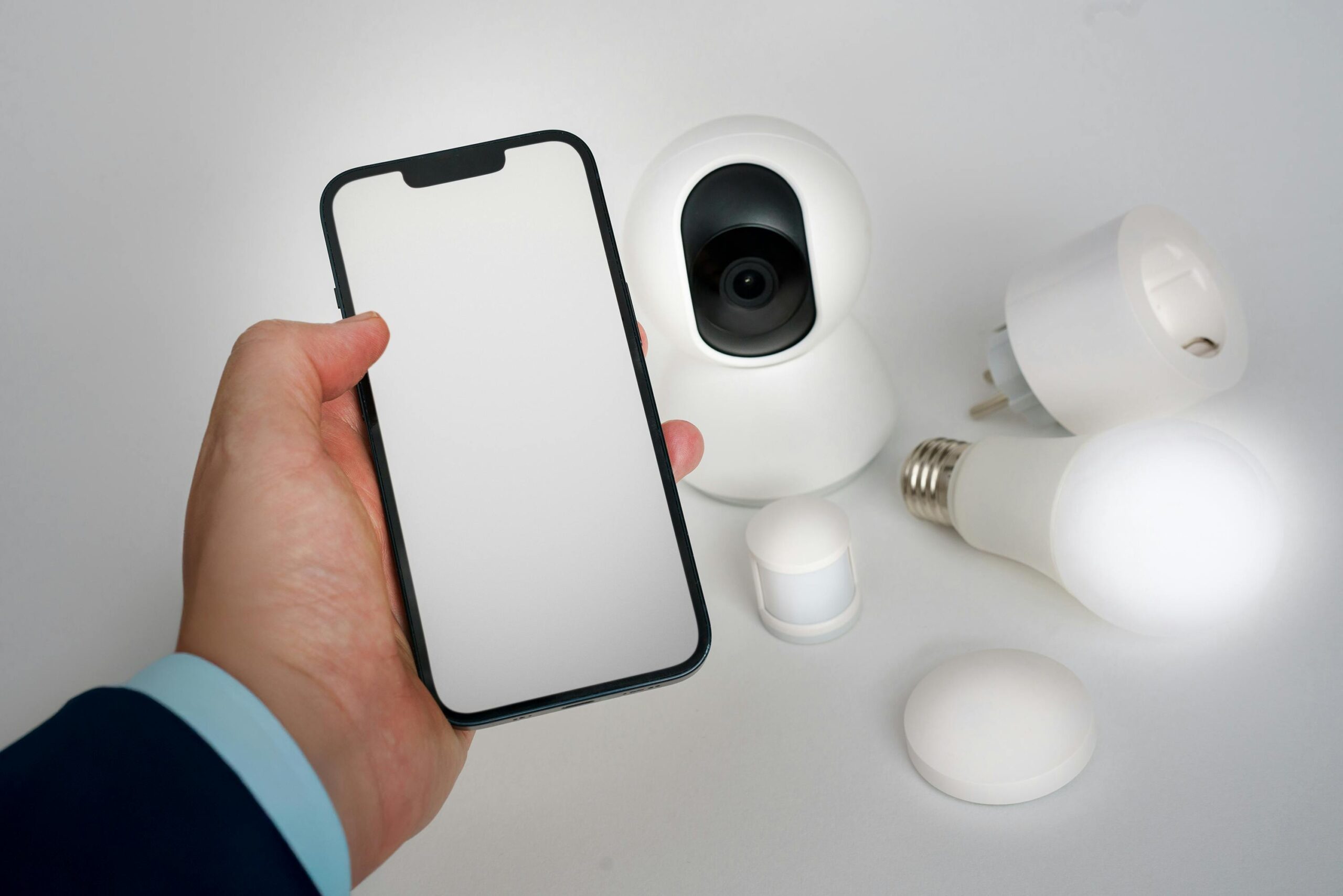
Our ability to sense the world around us isn’t just biological—it’s increasingly becoming digital, programmable, and extraordinarily precise through sensing technology.

🌍 The Hidden Language Your Device Speaks with Reality
Every moment of every day, your smartphone, smartwatch, and countless other devices are conducting silent conversations with the physical world. They’re measuring light, detecting motion, sensing pressure, tracking location, and translating temperature changes into actionable data. These conversations happen through sensing blocks—sophisticated components that bridge the gap between the tangible reality we inhabit and the digital realm we’ve created.
Sensing blocks are the unsung heroes of modern technology. They’re the reason your phone screen brightens in sunlight and dims in darkness. They’re why fitness trackers know you’ve climbed stairs, why your car can warn you about obstacles, and why virtual reality feels increasingly real. Understanding how these technological marvels work opens up a world of possibilities for developers, innovators, and curious minds alike.
🔬 What Exactly Are Sensing Blocks?
At their core, sensing blocks are modular hardware or software components designed to detect specific physical phenomena and convert them into digital signals that computers can process. Think of them as the eyes, ears, and fingertips of digital systems—each specialized for particular types of environmental information.
These blocks typically consist of three essential elements: a sensor that detects physical changes, a signal processor that converts analog information into digital data, and an interface that communicates with the main computing system. This trinity of components works in microseconds, creating real-time responsiveness that feels almost magical.
The Sensor Ecosystem in Your Pocket
Modern smartphones contain an impressive array of sensing blocks. An average device includes accelerometers for motion detection, gyroscopes for orientation, magnetometers for compass functionality, proximity sensors to detect when your face is near the screen, ambient light sensors for brightness adjustment, barometers for altitude measurement, and increasingly sophisticated cameras that serve as visual sensors.
Each of these operates independently yet collaboratively, creating a comprehensive picture of your device’s relationship with its environment. This sensor fusion—the combining of data from multiple sources—is what enables advanced features like augmented reality, contextual notifications, and intelligent battery management.
🎯 Precision Through Digital Sensing: From Theory to Practice
The precision offered by sensing blocks has revolutionized how we interact with technology. Unlike the approximate, often imprecise measurements of earlier eras, modern sensors can detect minute changes with extraordinary accuracy. An accelerometer can measure acceleration down to thousandths of a gravitational unit. GPS systems can pinpoint location to within meters. Temperature sensors can detect changes of fractions of a degree.
This precision translates directly into better user experiences. Navigation apps guide you with turn-by-turn accuracy. Health monitoring devices track your heart rate variability to assess stress levels. Smart home systems adjust climate control based on occupation patterns and individual room temperatures. Gaming controllers respond to the slightest wrist movements, creating immersive gameplay.
Real-World Applications Transforming Industries
Healthcare has been revolutionized by precise sensing technology. Wearable devices continuously monitor vital signs, detecting irregularities before they become emergencies. Glucose monitors provide diabetics with real-time blood sugar information without constant finger pricks. Sleep trackers analyze movement patterns, heart rate, and even blood oxygen levels to provide comprehensive sleep quality assessments.
In manufacturing, sensing blocks enable predictive maintenance. Vibration sensors on machinery detect anomalies that suggest impending failure, allowing repairs before costly breakdowns occur. Temperature and humidity sensors ensure optimal conditions for sensitive production processes. Quality control systems use visual sensors and machine learning to identify defects that human inspectors might miss.
Transportation sectors rely heavily on sensing technology. Modern vehicles contain dozens of sensors monitoring everything from tire pressure to engine performance. Autonomous vehicles take this further, using LIDAR, radar, cameras, and ultrasonic sensors to create 360-degree environmental awareness, making split-second decisions that keep passengers safe.
🛠️ Building with Sensing Blocks: A Developer’s Perspective
For software developers and hardware engineers, sensing blocks represent building blocks for innovation. Platforms like Arduino, Raspberry Pi, and various IoT development kits have democratized access to sophisticated sensing capabilities, allowing hobbyists and professionals alike to create sensing-enabled projects.
Programming with sensing blocks typically involves reading sensor data, filtering noise, calibrating for accuracy, and interpreting results within application logic. Modern development environments provide libraries and APIs that abstract much of the complexity, making sensor integration accessible even to those without deep hardware knowledge.
Practical Development Considerations
When working with sensing blocks, developers must consider several critical factors. Power consumption matters tremendously, especially for battery-powered devices. Continuous sensor polling drains batteries quickly, so intelligent sampling strategies are essential. Many modern sensors include low-power modes and interrupt-driven operation to minimize energy use.
Accuracy versus responsiveness presents another tradeoff. Averaging multiple readings increases accuracy but introduces latency. For applications requiring immediate response—like gaming or safety systems—this delay is unacceptable. Developers must balance these competing demands based on application requirements.
Environmental factors significantly affect sensor performance. Temperature extremes, humidity, electromagnetic interference, and physical vibration can all introduce errors. Robust applications include calibration routines, error checking, and data validation to ensure reliability under varying conditions.
📱 Mobile Sensing: Your Smartphone as a Universal Detector
The convergence of multiple sensors in smartphones has created unprecedented opportunities for innovative applications. Developers can now create apps that understand context, respond to environmental changes, and provide personalized experiences based on real-time sensing data.
Fitness and health applications exemplify this potential. By combining accelerometer data with GPS information, running apps calculate pace, distance, and elevation changes. Heart rate sensors in phones and connected wearables add cardiovascular intensity metrics. Some apps even use the camera’s light sensor as a makeshift pulse oximeter, detecting blood flow through fingertips.
Environmental monitoring apps turn phones into portable science labs. Sound level meters use microphones to measure noise pollution. Light meters assist photographers in setting proper exposures. Compass and level apps help with construction and navigation. Metal detectors use magnetometers to find ferrous objects. These applications demonstrate how standard phone sensors can serve purposes far beyond their original design intent.
Augmented Reality: Sensing Creates Digital Overlays
Augmented reality represents perhaps the most impressive application of mobile sensing blocks. By combining camera imagery with accelerometer, gyroscope, and magnetometer data, AR applications precisely track device position and orientation in three-dimensional space. This allows digital objects to appear anchored in the physical world, maintaining their position as you move around them.
GPS and visual feature detection add another layer, enabling location-based AR experiences. Navigation apps overlay directional arrows on real-world street views. Furniture shopping apps let you visualize how products would look in your home. Educational apps bring textbooks to life with interactive 3D models that respond to your viewing angle.
🤖 Internet of Things: Sensing at Scale
The Internet of Things extends sensing beyond personal devices to entire environments. Smart cities use sensor networks to monitor traffic flow, air quality, noise levels, and infrastructure conditions. This data enables responsive systems that optimize traffic light timing, alert authorities to pollution spikes, and identify maintenance needs before problems escalate.
Agriculture has been transformed by IoT sensing. Soil moisture sensors inform irrigation systems, conserving water while ensuring optimal growing conditions. Weather stations provide hyperlocal climate data. Drones equipped with multispectral cameras assess crop health across vast fields, identifying disease or nutrient deficiencies invisible to the human eye.
Industrial IoT leverages sensing for efficiency and safety. Factory floors become intelligent environments where production equipment communicates status, inventory systems automatically reorder supplies, and safety systems detect hazardous conditions immediately. The cumulative effect is manufacturing that’s more efficient, safer, and more responsive to demand fluctuations.
🔐 Privacy and Security in a Sensing World
The proliferation of sensing technology raises important privacy considerations. Sensors that make technology more responsive also create detailed records of our activities, locations, and behaviors. Microphones and cameras represent obvious privacy concerns, but even seemingly innocuous sensors like accelerometers can reveal sensitive information.
Research has demonstrated that accelerometer data can be used to infer typed passwords, reconstruct physical spaces by analyzing sound reflections, and even identify individuals by their walking patterns. Location data reveals not just where you’ve been but potentially what you were doing and who you were with.
Addressing these concerns requires multiple approaches. Technical solutions include data minimization—collecting only what’s necessary—and local processing that keeps sensitive information on devices rather than transmitting it to cloud servers. Encryption protects data in transit and at rest. Differential privacy adds noise to datasets, enabling aggregate analysis while protecting individual privacy.
Regulatory Frameworks and Best Practices
Regulations like GDPR and CCPA establish requirements for data collection, usage, and user rights. Responsible developers and companies implement privacy by design, considering data protection from initial concept through deployment. Clear privacy policies, meaningful consent mechanisms, and user control over sensor permissions are essential components of ethical sensing applications.
🚀 The Future of Sensing Technology
Emerging sensing technologies promise even more impressive capabilities. Quantum sensors achieve unprecedented precision by exploiting quantum mechanical properties. They’re already being developed for ultra-accurate navigation systems that don’t rely on GPS, medical imaging with atomic-level resolution, and mineral exploration that detects underground deposits from the surface.
Biosensors that interface directly with biological systems are advancing rapidly. Contact lenses with integrated glucose sensors could eliminate finger-stick testing for diabetics. Ingestible sensors monitor digestive health from inside the body. Brain-computer interfaces detect neural signals, potentially allowing thought-controlled devices and prosthetics that feel like natural limbs.
Sensor fusion will become increasingly sophisticated as artificial intelligence improves. Machine learning algorithms excel at finding patterns in complex sensor data, enabling predictive capabilities that seem almost prescient. Your car might detect mechanical problems before they cause symptoms. Your home might adjust climate control based on learned preferences and predicted arrivals. Your health tracker might warn of illness before symptoms appear.
Miniaturization and Integration
Sensors continue shrinking while improving performance. Nanotechnology enables sensors smaller than cells, potentially allowing environmental monitoring at microscopic scales or medical diagnostics that detect diseases at their earliest stages. Integration advances mean more sensors in smaller packages—entire sensor suites that once required multiple chips now fit in single integrated circuits.
Energy harvesting may eliminate battery requirements for many sensors. Devices powered by ambient light, temperature differentials, or radio waves could operate indefinitely without maintenance. This enables sensor deployments in remote locations, inside sealed structures, or situations where battery replacement is impractical.
💡 Empowering Innovation Through Accessible Sensing
The democratization of sensing technology has lowered barriers to innovation dramatically. Educational programs teach students of all ages to work with sensors, developing both technical skills and creative problem-solving abilities. Makerspaces and fab labs provide community access to sensing equipment and expertise.
Open-source hardware and software projects share sensor designs, code libraries, and implementation guides freely. This collaborative approach accelerates innovation, allowing individuals to build on existing work rather than starting from scratch. Online communities provide support, troubleshooting assistance, and inspiration for new projects.
The economic accessibility of sensing components means innovation isn’t limited to well-funded corporations. Entrepreneurial individuals can prototype sensing-enabled products with modest budgets. Crowdfunding platforms help promising projects reach market. This democratization has led to diverse innovations addressing needs overlooked by mainstream technology companies.
🎓 Learning to Think in Sensors
Understanding sensing blocks changes how you perceive technology and the world around it. You begin noticing the subtle ways devices respond to environment and context. You recognize opportunities where sensing could solve problems or enhance experiences. This sensor literacy becomes increasingly valuable as sensing pervades more aspects of life.
For those interested in developing sensing skills, numerous resources exist. Online courses cover sensor fundamentals, programming, and specific applications. Tutorial videos demonstrate practical projects from simple thermometers to complex robotics. Books range from beginner-friendly introductions to advanced engineering texts.
Hands-on experimentation remains the most effective learning method. Starting with simple projects—a motion-activated light, a temperature logger, a distance-measuring device—builds confidence and understanding. Gradually increasing complexity develops skills naturally. Many learners find that personal projects addressing their own needs or interests provide the most engaging learning experiences.

🌟 Embracing the Sensing Revolution
Sensing blocks represent more than technological components—they’re interfaces between physical and digital realities, enabling unprecedented understanding of and interaction with our environment. As these technologies become more sophisticated, accessible, and integrated into daily life, they reshape what’s possible in fields from healthcare to entertainment, transportation to environmental protection.
The precision and ease that modern sensing provides once existed only in science fiction. Today, it’s ordinary technology we carry in our pockets, wear on our wrists, and increasingly integrate into our homes, vehicles, and cities. Understanding how sensing works empowers you to use it more effectively, develop new applications, and participate in conversations about privacy, capability, and the future of human-technology interaction.
Whether you’re a developer creating the next innovative app, an entrepreneur identifying market opportunities, a student exploring technology’s possibilities, or simply someone curious about how modern devices achieve their seemingly magical capabilities, sensing blocks offer fascinating depths to explore. They unlock not just your device’s senses, but potentially your own creative and innovative potential.