Block programming is revolutionizing robotics education, making coding accessible to learners of all ages while building crucial 21st-century skills through hands-on experience.

🤖 The Block Programming Revolution in Modern Classrooms
In classrooms around the world, a quiet revolution is taking place. Students who once found programming intimidating are now creating complex robotic behaviors using intuitive drag-and-drop interfaces. Block programming, also known as visual programming, has emerged as a powerful gateway into the world of robotics and computational thinking.
This educational approach uses graphical blocks that snap together like puzzle pieces, representing code commands without requiring learners to memorize syntax or worry about semicolons and brackets. The result is an engaging, accessible entry point into programming that has transformed how educators introduce robotics concepts.
Real-World Success Stories from Educational Institutions
Case studies from schools worldwide demonstrate the transformative power of block programming in robotics education. At Lincoln Elementary in California, teachers reported a 73% increase in student engagement when they integrated block-based robotics into their STEM curriculum. Students who previously struggled with abstract mathematical concepts began excelling when they could visualize their code controlling physical robots.
The school implemented a program using programmable robots controlled through block-based interfaces, allowing third through fifth graders to create increasingly complex behaviors. Students started with simple movement commands and progressively tackled challenges involving sensors, loops, and conditional logic.
In Singapore, the Ministry of Education piloted a nationwide initiative introducing block programming robotics to primary schools. The results were remarkable: students demonstrated improved problem-solving abilities, enhanced collaboration skills, and increased confidence in technology-related subjects. Teachers noted that the visual nature of block programming allowed students to focus on computational thinking rather than getting bogged down in syntax errors.
Breaking Down Barriers to Entry 🚀
Traditional text-based programming languages present significant barriers for beginners, particularly younger learners and those without prior coding experience. The cognitive load of remembering commands, understanding abstract syntax, and debugging cryptic error messages can discourage many potential programmers before they truly begin.
Block programming eliminates these barriers through several key features:
- Visual representation of programming concepts makes abstract ideas concrete
- Drag-and-drop interfaces reduce typing errors and syntax mistakes
- Color-coded categories help learners understand different command types
- Immediate visual feedback when controlling robots reinforces cause-and-effect relationships
- Progressive complexity allows scaffolded learning experiences
A case study from Toronto District School Board examined how block programming affected student confidence in robotics classes. Researchers found that 89% of students using block-based interfaces felt capable of creating their own programs, compared to only 34% of students introduced directly to text-based coding.
From Blocks to Real-World Programming Skills
Critics sometimes question whether block programming provides genuine preparation for professional programming careers. However, multiple longitudinal studies demonstrate that students who begin with block-based robotics programming develop stronger foundational understanding than those who start with text-based languages.
A five-year study conducted across twelve secondary schools in the United Kingdom tracked students who began robotics with block programming versus those who started with Python. By the end of the study period, students from the block programming group demonstrated equivalent or superior skills in text-based languages, with significantly higher retention rates in STEM programs.
The key lies in understanding that block programming teaches the fundamental concepts that underpin all programming: sequences, loops, conditionals, variables, and functions. Once students master these concepts through visual interfaces, transitioning to text-based languages becomes primarily a matter of learning new syntax rather than new concepts.
🎓 Developing Computational Thinking Through Robotics
Computational thinking—the ability to break down complex problems into manageable parts and create step-by-step solutions—has been identified as a critical skill for the 21st century. Block-based robotics education provides an ideal environment for developing these thinking patterns.
At Roosevelt Middle School in Chicago, researchers documented how students developed computational thinking skills through a semester-long robotics program. Students worked in teams to program robots for increasingly complex challenges, from basic navigation to autonomous object sorting.
The study revealed measurable improvements across four key computational thinking dimensions:
- Decomposition: breaking complex challenges into smaller, manageable tasks
- Pattern recognition: identifying similarities between different problems
- Abstraction: focusing on important information while filtering out irrelevant details
- Algorithm design: creating step-by-step solutions to problems
Students who participated in the program scored 41% higher on standardized computational thinking assessments compared to control groups, demonstrating that robotics education with block programming provides transferable problem-solving skills applicable far beyond coding.
Inclusive Education and Diverse Learners
One of the most compelling aspects of block programming in robotics education is its ability to accommodate diverse learning styles and abilities. Case studies consistently show that visual programming interfaces benefit students with different learning preferences, including those with dyslexia, ADHD, or other learning differences.
A research project at the University of Washington examined how students with diagnosed learning disabilities engaged with robotics education. When provided with block-based programming tools, these students achieved learning outcomes comparable to neurotypical peers, whereas traditional text-based programming had previously presented insurmountable challenges.
The tactile, visual nature of block programming engages multiple senses simultaneously, creating stronger memory associations and understanding. For kinesthetic learners especially, the combination of manipulating visual blocks and seeing physical robots respond creates powerful learning experiences.
✨ Real Robots, Real Results: Hardware Integration
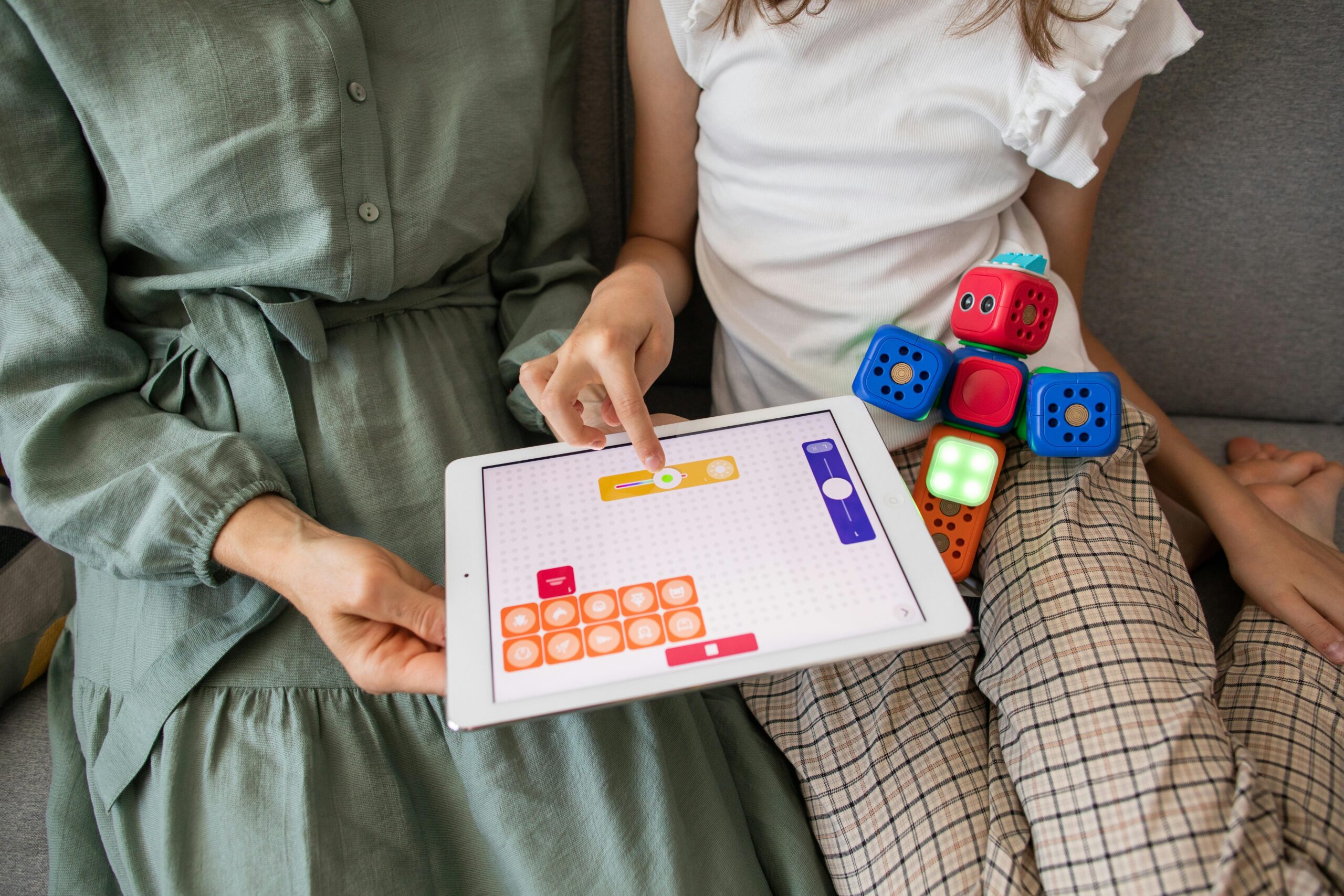
The true power of block programming in robotics education emerges when students see their code control physical hardware. Popular educational robotics platforms have embraced block-based programming interfaces, making sophisticated robotics accessible to elementary and secondary students.
Schools implementing programs with platforms like LEGO Mindstorms, VEX Robotics, and Arduino-based systems report exceptional engagement levels. A case study from the Australian Science Teachers Association documented twelve schools using block-programmable robots across different grade levels.
The findings were consistent: students demonstrated sustained engagement over entire academic years, with many continuing robotics activities during lunch breaks and after school. Teachers reported that the immediate feedback loop—writing code, downloading to robot, observing behavior, and iterating—created addictive learning cycles that kept students motivated through challenging concepts.
Collaborative Learning and Social Skills Development
Robotics education with block programming naturally lends itself to collaborative learning environments. Most successful implementations organize students into small teams, mirroring real-world engineering and technology workplaces.
A comprehensive case study from the Netherlands examined social skill development in robotics classrooms over three years. Researchers observed 450 students working in teams to program robots for various challenges. The study documented significant improvements in:
- Communication skills, particularly explaining technical concepts to peers
- Conflict resolution when team members disagreed about programming approaches
- Leadership and delegation as students naturally assumed different roles
- Empathy and perspective-taking when debugging others’ code
Teachers noted that robotics projects created authentic reasons for students to communicate, negotiate, and collaborate—skills that are difficult to teach through traditional lecture-based instruction but emerge naturally in project-based robotics environments.
🌟 Progressive Complexity: Scaffolding Learning Journeys
Effective block programming curricula for robotics education embrace progressive complexity, starting with fundamental concepts and gradually introducing more sophisticated programming constructs. This scaffolded approach appears consistently in successful case studies.
The Robotics Education Project at MIT studied how students progress through block programming concepts when learning robotics. Their research identified optimal learning sequences that minimize frustration while maximizing skill development.
Students typically begin with direct control commands, moving robots forward, backward, and turning. Next come loops for repeating actions, followed by sensor integration for responsive behaviors. Conditional logic introduces decision-making, while variables and functions enable more sophisticated programs.
Schools that followed this progression reported 68% fewer students expressing frustration compared to programs that introduced concepts in random order or too quickly. The key is ensuring each new concept builds logically on previously mastered skills.
Assessment and Learning Outcomes Measurement
Measuring learning outcomes in block programming robotics education requires moving beyond traditional testing methods. Successful programs employ portfolio-based assessment, where students document their projects, challenges faced, and problem-solving approaches.
A case study from Japan’s National Institute for Educational Policy Research examined assessment methods across 30 schools teaching robotics with block programming. The most effective approaches combined multiple assessment types:
- Project-based demonstrations where students present working robots
- Peer review sessions encouraging constructive feedback
- Reflective journals documenting learning processes
- Practical challenges testing problem-solving abilities
- Collaborative evaluations assessing teamwork and communication
These multifaceted assessment approaches provided richer understanding of student learning than traditional tests, capturing both technical skills and broader competencies like creativity, persistence, and collaboration.
🔧 Teacher Professional Development and Support
The success of block programming in robotics education depends significantly on teacher preparation and ongoing support. Case studies consistently identify professional development as a critical implementation factor.
The European Schoolnet Academy conducted a pan-European study examining teacher training for robotics education. Schools where teachers received comprehensive professional development—including hands-on robotics experience, pedagogical training, and ongoing coaching—achieved dramatically better student outcomes than schools where teachers simply received equipment and curriculum materials.
Effective professional development programs share common characteristics: hands-on experience with the technology before teaching it, opportunities to collaborate with other educators, access to curriculum resources and lesson plans, and ongoing technical support when problems arise.
Overcoming Implementation Challenges
Despite compelling benefits, schools face real challenges implementing block programming robotics education. Common obstacles include budget constraints, limited technical infrastructure, teacher confidence with technology, and curriculum integration pressures.
However, successful case studies provide roadmaps for overcoming these barriers. Schools in economically disadvantaged areas have implemented thriving robotics programs by seeking community partnerships, applying for educational grants, and starting small with affordable platforms before expanding.
One particularly inspiring case comes from a rural school district in Montana, where limited budgets seemed to preclude robotics education. Teachers partnered with local engineering firms, which donated equipment and provided volunteer mentors. The program grew from a single after-school club to a district-wide curriculum component over four years, demonstrating that creativity and community engagement can overcome resource limitations.
🚀 Looking Forward: The Future of Block Programming in Robotics
As technology evolves, so too does block programming for robotics education. Emerging trends point toward increasingly sophisticated capabilities wrapped in accessible interfaces, along with artificial intelligence integration that provides personalized learning experiences.
Recent developments include augmented reality overlays that visualize robot sensor data, cloud-based programming environments enabling collaboration across distances, and adaptive interfaces that adjust complexity based on learner progression. These innovations promise to make robotics education even more engaging and effective.
Research institutions worldwide continue studying block programming’s impact, with findings consistently supporting its effectiveness for introducing robotics and programming concepts. As evidence accumulates, educational systems are increasingly incorporating these approaches into standard curricula rather than treating them as supplementary enrichment.
Preparing Students for Technology-Driven Futures
Perhaps the most compelling argument for block programming in robotics education is its role preparing students for increasingly technology-driven futures. Regardless of career paths, today’s students will navigate worlds where understanding technology, computational thinking, and problem-solving are essential competencies.
Block-based robotics education provides these foundational skills while maintaining accessibility and engagement. Students learn that technology is not mysterious or intimidating but rather a tool they can understand, control, and create with—a mindset that serves them throughout their lives.
The case studies examined throughout this exploration demonstrate consistent patterns: increased engagement, improved problem-solving abilities, enhanced collaboration skills, and genuine preparation for advanced programming concepts. From elementary classrooms to secondary schools, across diverse communities and educational contexts, block programming unlocks robotics education for all learners.
💡 Taking Action: Implementing Block Programming Robotics
For educators and administrators inspired by these case studies, implementation begins with small, manageable steps. Start by exploring available platforms, connecting with other educators already teaching robotics, and identifying potential funding sources or partnerships.
Many educational robotics platforms offer free curriculum resources, teacher training webinars, and trial programs. Beginning with an after-school club or elective course allows teachers to build confidence and refine approaches before expanding to required curriculum components.
The evidence is clear: block programming provides a powerful, accessible pathway into robotics education, developing critical skills while maintaining engagement across diverse learner populations. As technology continues reshaping our world, educational approaches that demystify programming and robotics become not just valuable but essential.
The future belongs to those who understand and can shape technology. Block programming in robotics education ensures that future is accessible to all students, regardless of background, learning style, or prior experience. The case studies show us what’s possible—now it’s time to bring these possibilities into every classroom.