Math blocks are revolutionizing robotics education by providing intuitive tools that enable students and developers to create sophisticated robot behaviors through mathematical precision and computational efficiency.

🤖 The Mathematical Foundation of Modern Robotics
In the realm of educational robotics and professional automation, math blocks have emerged as powerful building components that bridge the gap between abstract mathematical concepts and tangible robotic actions. These visual programming elements allow users to implement complex calculations, geometric transformations, and algorithmic logic without writing extensive code from scratch.
The integration of mathematical operations into block-based programming environments has democratized robotics development, making it accessible to middle school students while maintaining the sophistication required by advanced researchers. This dual nature represents a fundamental shift in how we approach computational thinking and robot behavior design.
Understanding the capabilities of math blocks begins with recognizing their role in the broader ecosystem of visual programming. Unlike traditional text-based coding that requires memorization of syntax and structure, math blocks provide immediate visual feedback and prevent many common programming errors through their design constraints.
📐 Core Mathematical Operations in Robotic Programming
The foundation of any mathematical system in robotics consists of basic arithmetic operations: addition, subtraction, multiplication, and division. However, math blocks extend far beyond these elementary functions to include trigonometric calculations, exponential functions, logarithms, and statistical operations that are essential for sophisticated robot behaviors.
When programming a robot to navigate an obstacle course, for instance, developers must calculate distances, angles, and velocities with precision. Math blocks enable these calculations through intuitive visual representations that connect directly to sensor inputs and motor outputs. The real power emerges when multiple mathematical operations are chained together to create complex decision-making algorithms.
Trigonometry: The Language of Robot Movement
Trigonometric functions form the backbone of robot navigation and orientation. When a robot needs to turn at specific angles, calculate its position relative to objects, or determine the trajectory for reaching a target, sine, cosine, and tangent functions become indispensable tools.
Math blocks implementing trigonometry allow programmers to convert between different coordinate systems, calculate the shortest path between two points, and determine optimal turning radii. These operations occur dozens of times per second during robot operation, making the efficiency of math blocks critical for real-time performance.
Random Numbers and Probabilistic Behaviors
Introducing controlled randomness into robot behaviors creates more natural and adaptive movements. Math blocks that generate random numbers within specified ranges enable robots to explore environments more effectively, avoid predictable patterns that could lead to loops, and simulate decision-making processes that mirror biological organisms.
The implementation of random number generation in math blocks typically includes options for integers versus floating-point numbers, minimum and maximum boundaries, and even probability distributions for more advanced applications. These features transform simple deterministic machines into dynamic systems capable of responding to uncertainty.
⚙️ Precision Control Through Mathematical Constraints
One of the most powerful applications of math blocks lies in their ability to constrain and normalize values within specific ranges. Robots operate within physical limitations—motors have maximum speeds, sensors return values within defined ranges, and mechanical components have operational boundaries that must be respected.
Math blocks provide functions for clamping values, mapping ranges, and scaling inputs that ensure robot behaviors remain within safe and effective parameters. When a sensor returns a raw value between 0 and 1023, a math block can instantly map that to a motor speed between -100 and 100, accounting for the specific requirements of the hardware and the desired behavior.
Proportional Control and PID Implementation
Advanced robotics frequently employs PID (Proportional-Integral-Derivative) controllers to achieve smooth, responsive movements. Math blocks facilitate the implementation of these control algorithms by providing the mathematical operations necessary to calculate error terms, accumulate integral values, and compute derivative rates of change.
A line-following robot, for example, uses math blocks to calculate how far it has deviated from the line (error), accumulate this error over time (integral), and determine how rapidly the error is changing (derivative). These three mathematical components combine through weighted addition to produce a control signal that keeps the robot precisely on track.
🎯 Optimizing Robot Performance Through Computational Efficiency
The efficiency of math blocks directly impacts robot performance, particularly in resource-constrained environments like microcontrollers with limited processing power and memory. Well-designed math blocks execute calculations in milliseconds, allowing control loops to run at frequencies high enough for smooth, responsive robot behaviors.
Understanding the computational cost of different mathematical operations helps programmers make informed decisions. Addition and subtraction execute faster than multiplication and division, while trigonometric functions and logarithms require even more processing time. Strategic use of math blocks involves balancing precision requirements against computational constraints.
Lookup Tables and Approximation Strategies
For computationally expensive operations that occur frequently, math blocks can implement lookup tables that store pre-calculated values. Instead of computing sine or cosine values in real-time, the robot references a table of values, trading memory usage for processing speed. This optimization technique dramatically improves performance in time-critical applications.
Approximation algorithms represent another efficiency strategy available through specialized math blocks. Calculating square roots, for instance, can use Newton’s method to converge on accurate values quickly, or employ faster approximation formulas when absolute precision is less critical than response time.
🔄 Transformation Matrices and Coordinate Systems
Advanced robotics applications frequently involve transforming coordinates between different reference frames. A robot arm, for example, must convert desired end-effector positions in world coordinates to joint angles through inverse kinematics calculations that rely heavily on matrix mathematics.
Math blocks that implement vector and matrix operations enable these transformations without requiring programmers to manually code matrix multiplication, rotation transformations, or translation operations. This abstraction allows developers to focus on high-level robot behaviors rather than low-level mathematical implementation details.
Rotation and Translation in Three-Dimensional Space
When robots operate in three-dimensional environments—whether flying drones, swimming underwater vehicles, or articulated manipulator arms—they must continuously calculate their orientation and position using rotation matrices and translation vectors. Math blocks provide these capabilities through intuitive interfaces that accept angles and distances as inputs.
The mathematical complexity underlying these operations remains hidden from users who don’t need to understand quaternions, Euler angles, or homogeneous transformation matrices. However, the precision and efficiency of the underlying implementations ensure that robot movements remain accurate and smooth even during complex maneuvers.
📊 Sensor Fusion Through Mathematical Integration
Modern robots typically incorporate multiple sensors that provide complementary information about the environment and the robot’s state. Math blocks enable sensor fusion algorithms that combine data from accelerometers, gyroscopes, magnetometers, distance sensors, and cameras to produce more accurate and reliable state estimates than any single sensor could provide.
A balancing robot demonstrates this principle perfectly. Accelerometers provide tilt information but suffer from vibration noise, while gyroscopes measure rotation rates accurately but drift over time. Math blocks implement complementary filters that weight these sensor inputs mathematically to extract the best characteristics of each while minimizing their weaknesses.
Kalman Filters and State Estimation
The Kalman filter represents one of the most powerful sensor fusion algorithms, using mathematical predictions and measurements to estimate system states with optimal accuracy. While the underlying mathematics involves matrix operations and probability distributions, math blocks can encapsulate this complexity into accessible components.
For robot navigation, Kalman filters implemented through math blocks combine odometry data from wheel encoders with position measurements from GPS or visual landmarks. The mathematical framework accounts for uncertainty in both predictions and measurements, producing position estimates that are more reliable than either data source alone.
🚀 Creating Adaptive Behaviors with Mathematical Logic
Beyond numerical calculations, math blocks include comparison operations and logical functions that enable robots to make decisions based on sensor inputs and internal states. These conditional behaviors transform robots from simple machines that follow fixed paths into intelligent systems that adapt to changing circumstances.
Mathematical comparisons—greater than, less than, equal to—form the foundation of if-then decision structures. When combined with logical operators like AND, OR, and NOT, these math blocks create sophisticated behavior trees that guide robot actions based on multiple concurrent conditions.
Threshold Detection and State Machines
Many robot behaviors depend on detecting when sensor values cross specific thresholds. A line-following robot switches between turning left and turning right based on whether light sensor readings exceed or fall below calibrated thresholds. Math blocks implement these comparisons efficiently, enabling rapid response to environmental changes.
State machines represent a higher-level application of mathematical logic, where robots transition between distinct behavioral modes based on conditions evaluated through math blocks. A competition robot might have separate states for autonomous navigation, object manipulation, and scoring, with mathematical conditions determining when to transition between these states.
💡 Real-World Applications Across Robotics Domains
The versatility of math blocks manifests across diverse robotics applications, from educational settings to industrial automation. In classrooms, students learn fundamental STEM concepts by programming robots to solve geometric challenges, requiring them to apply trigonometry, algebra, and spatial reasoning in practical contexts.
Industrial robots use identical mathematical principles at larger scales and higher precision. Assembly line robots calculate trajectories between work points, applying acceleration profiles that minimize cycle time while respecting mechanical constraints. The math blocks in professional robotics environments may have more parameters and tighter tolerances, but the underlying concepts remain consistent with educational implementations.
Competition Robotics and Mathematical Problem-Solving
Robotics competitions like FIRST, VEX, and RoboCup challenge teams to solve complex problems that demand creative application of mathematical principles. Scoring mechanisms often reward precision and efficiency, making optimized use of math blocks a competitive advantage.
Teams that master mathematical programming through blocks can implement autonomous routines that navigate accurately, manipulate game objects precisely, and adapt to opponent strategies dynamically. The problem-solving skills developed through this process extend far beyond robotics into general computational thinking and mathematical literacy.
🔧 Debugging and Testing Mathematical Robot Behaviors
The visual nature of math blocks provides significant advantages during debugging and testing phases of robot development. Programmers can trace data flow through mathematical operations visually, identifying where calculations produce unexpected results or where logical conditions fail to trigger appropriately.
Many block-based programming environments include simulation capabilities that allow testing mathematical algorithms before deploying code to physical robots. This approach saves time, prevents damage to hardware, and enables exploration of edge cases that might be difficult or dangerous to test with real robots.
Data Logging and Mathematical Analysis
Math blocks often include capabilities for logging sensor values, calculated results, and decision outcomes to files or displays. This data becomes invaluable for analyzing robot performance, identifying patterns in behavior, and refining mathematical models that govern robot actions.
Graphical displays of logged data reveal relationships between variables that might not be apparent during real-time operation. A plot of motor speeds versus sensor readings might show that mathematical scaling functions need adjustment, or that threshold values should be recalibrated for optimal performance.
🌟 The Future of Mathematical Robotics Programming
As robotics technology advances and artificial intelligence becomes more integrated with physical systems, math blocks continue evolving to support increasingly sophisticated applications. Machine learning algorithms that enable robots to improve performance through experience rely fundamentally on mathematical operations—gradient descent, backpropagation, and statistical analysis—that can be abstracted into block-based interfaces.
The next generation of math blocks will likely incorporate neural network layers, computer vision operations, and natural language processing capabilities while maintaining the intuitive visual programming paradigm that makes them accessible. This evolution ensures that students learning robotics today develop skills that remain relevant as the field advances.
Emerging applications in collaborative robotics, where machines work alongside humans, demand precise mathematical control of forces and velocities to ensure safety. Math blocks that implement compliance control, impedance matching, and force limiting will enable a new generation of programmers to create robots that interact with the physical world more naturally and safely.
🎓 Educational Impact and Learning Trajectories
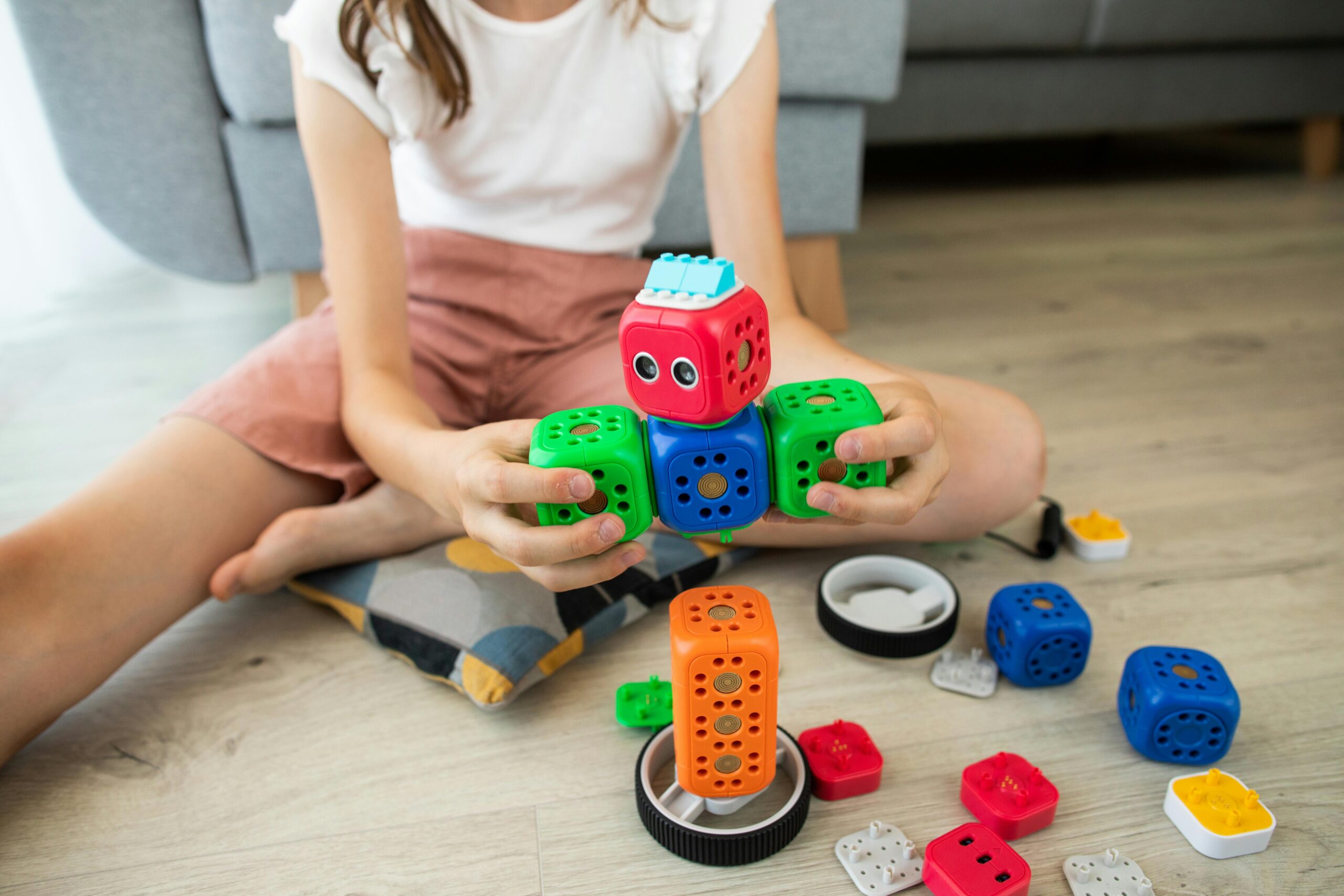
The pedagogical value of math blocks extends beyond robotics into broader mathematical education. Students who might struggle with abstract mathematical concepts in traditional classroom settings often find motivation and understanding when those same concepts control robot behaviors they can observe directly.
Learning trajectories that incorporate math blocks typically begin with basic arithmetic operations controlling simple movements, progress through geometric calculations for navigation challenges, and culminate in sophisticated algorithms that integrate multiple mathematical domains. This progression builds both technical skills and confidence in mathematical problem-solving.
Teachers report that students who program robots using math blocks develop stronger intuition about mathematical relationships, better understanding of variables and functions, and improved ability to decompose complex problems into manageable components. These skills transfer to other academic domains and prepare students for advanced study in STEM fields.
🔬 Precision Engineering Through Mathematical Modeling
Professional robotics engineers use mathematical models to predict robot behaviors before building physical prototypes. Math blocks in simulation environments implement these models, allowing engineers to test hypotheses about mechanical designs, control algorithms, and system integration virtually.
The precision enabled by mathematical modeling reduces development costs, accelerates iteration cycles, and improves final product quality. When a robot manufacturer can simulate thousands of operational scenarios using math blocks, they identify potential failures and optimize performance far more efficiently than through physical testing alone.
This modeling capability transforms math blocks from educational tools into professional engineering instruments that support product development from initial concept through production deployment. The seamless transition between educational and professional environments validates the power and versatility of the math block paradigm.
The transformative power of math blocks in robotics stems from their unique combination of accessibility, precision, and efficiency. By encapsulating complex mathematical operations in visual, intuitive formats, they enable learners and professionals alike to create sophisticated robot behaviors that would otherwise require extensive programming expertise. As robotics continues expanding into new domains and applications, math blocks will remain essential tools for translating mathematical concepts into physical actions, empowering the next generation of innovators to build intelligent machines that enhance human capabilities and solve pressing challenges across industries and societies.