
Robotics is revolutionizing how teams collaborate, transforming traditional learning environments into dynamic spaces where creativity, problem-solving, and communication flourish through hands-on technological experiences.

🤖 The Intersection of Robotics and Team Building
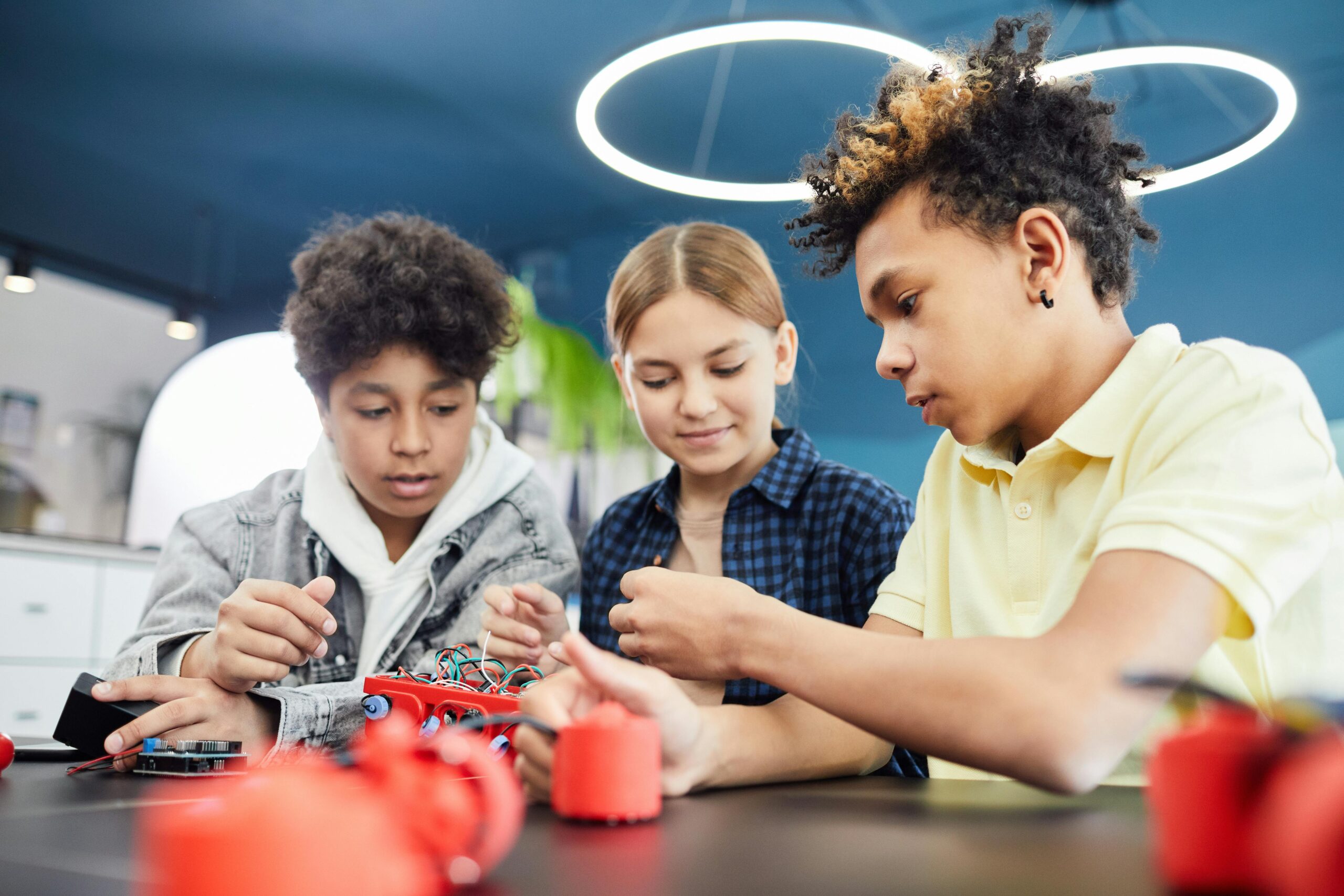
In today’s rapidly evolving technological landscape, the integration of robotics into educational and professional settings has emerged as a powerful catalyst for developing essential teamwork skills. Unlike traditional team-building exercises, robotics projects offer tangible challenges that require diverse skill sets, clear communication, and collaborative problem-solving. When individuals come together to design, build, and program robots, they create a shared purpose that naturally fosters cooperation and mutual respect.
The beauty of robotics as a team-building tool lies in its multidisciplinary nature. A successful robotics project demands contributions from team members with various strengths: engineers who understand mechanics, programmers who can write efficient code, designers who envision the robot’s form and function, and project managers who coordinate efforts and timelines. This diversity creates an environment where every team member’s contribution is valued and necessary for success.
Research consistently demonstrates that hands-on, project-based learning through robotics significantly improves collaboration skills. Students and professionals working on robotics teams develop patience, learn to give and receive constructive feedback, and understand the importance of delegating tasks based on individual strengths. These skills transcend the robotics lab and become invaluable assets in any professional or personal context.
Breaking Down Communication Barriers Through Technical Challenges
One of the most significant advantages of using robotics for team building is how it naturally breaks down communication barriers. When faced with a malfunctioning robot or a programming challenge, team members must articulate their thoughts clearly, listen actively to others’ suggestions, and work together to troubleshoot problems. The immediate feedback provided by robotic systems—either the robot works or it doesn’t—creates an environment where effective communication becomes essential rather than optional.
Technical vocabulary becomes a shared language that unites team members across different backgrounds. As participants learn terms like “servo motors,” “sensors,” “algorithms,” and “autonomy,” they develop a common framework for discussion. This shared lexicon reduces misunderstandings and creates a sense of belonging within the team. Moreover, when team members teach each other new concepts, they strengthen interpersonal bonds while expanding their collective knowledge base.
The iterative nature of robotics projects also teaches teams the value of open communication during failure. When a robot doesn’t perform as expected, teams must analyze what went wrong without assigning blame. This process cultivates a growth mindset where mistakes are viewed as learning opportunities rather than personal shortcomings. Teams that master this approach in robotics projects carry this constructive attitude into other collaborative endeavors.
Defining Roles While Maintaining Flexibility 🎯
Effective robotics teams understand the importance of role definition while maintaining flexibility. At the project’s outset, teams typically assign roles based on individual expertise and interests: mechanical engineers focus on physical construction, software developers handle programming, and project coordinators manage timelines and resources. However, the dynamic nature of robotics challenges often requires team members to step outside their primary roles and support colleagues in different areas.
This balance between specialization and flexibility teaches valuable lessons about organizational dynamics. Team members learn when to lead and when to follow, when to assert their expertise and when to defer to others with more relevant knowledge. These experiences develop emotional intelligence and adaptive leadership skills that are increasingly valuable in modern workplaces where job roles are fluid and interdisciplinary collaboration is the norm.
Robotics competitions and challenges further emphasize the importance of role clarity. Under time pressure and competitive conditions, teams with well-defined responsibilities and clear communication protocols consistently outperform groups with ambiguous role structures. Yet the most successful teams also demonstrate the ability to improvise and redistribute tasks when unexpected challenges arise, proving that rigid hierarchy can be as detrimental as complete lack of structure.
Problem-Solving as a Collaborative Sport
Robotics transforms problem-solving from an individual intellectual exercise into a collaborative sport. Complex robotic challenges rarely have single correct solutions; instead, they present multifaceted problems that benefit from diverse perspectives. When team members approach a challenge from different angles—one considering mechanical solutions, another exploring software fixes, and a third evaluating strategic approaches—the resulting synthesis often produces innovative solutions that no individual would have conceived alone.
The debugging process in robotics particularly exemplifies collaborative problem-solving. When a robot malfunctions, teams must systematically eliminate possibilities, test hypotheses, and integrate feedback from multiple sources. One team member might notice a loose connection, another might identify a logic error in the code, and a third might recognize that the problem stems from unrealistic performance expectations. This collective troubleshooting process teaches teams to value diverse observation skills and analytical approaches.
Design thinking methodologies naturally emerge in robotics team environments. Teams learn to empathize with end-users (or competition judges), define problems clearly, ideate multiple solutions, prototype rapidly, and test iteratively. This human-centered approach to problem-solving, reinforced through robotics projects, prepares team members for innovation challenges across industries and disciplines.
Building Trust Through Shared Success and Failure 🏆
Trust forms the foundation of effective teamwork, and robotics projects provide unique opportunities for trust-building through shared experiences. When a team successfully programs a robot to complete a complex task, the collective celebration reinforces mutual respect and confidence in each other’s abilities. These shared victories create positive emotional associations with collaboration and motivate teams to tackle even more ambitious challenges together.
Equally important are the lessons learned through shared failures. When a robot fails during a demonstration or competition, teams experience disappointment together. How they respond to this setback—whether they support each other, analyze mistakes constructively, or assign blame—determines whether trust deepens or erodes. Teams that navigate failures with grace and maintain psychological safety create environments where members feel comfortable taking creative risks and proposing unconventional solutions.
The physical nature of robotics projects also builds trust through interdependence. When one team member holds components while another secures connections, when programmers rely on builders to create stable platforms for sensors, when strategists depend on technical teams to execute their vision—these moments of necessary dependence create bonds that purely theoretical or individual projects cannot replicate.
Integrating Robotics into Educational Curricula
Educational institutions worldwide are recognizing robotics’ potential as a teamwork development tool and integrating it into curricula at all levels. Elementary schools introduce simple robotics kits that teach basic programming and mechanical principles while requiring students to work in pairs or small groups. Middle schools expand on these foundations with more sophisticated challenges that demand project planning, resource allocation, and presentation skills. High schools and universities offer competitive robotics programs that mirror real-world engineering projects in complexity and scope.
The scalability of robotics education makes it accessible across age groups and skill levels. Younger students might program a simple wheeled robot to navigate a maze, developing fundamental collaboration skills in the process. Advanced students might design autonomous drones or humanoid robots that require months of coordinated effort across multiple specialties. Regardless of complexity, the core team-building benefits remain consistent: communication, role definition, problem-solving, and trust development.
Educators appreciate that robotics naturally incorporates STEM concepts (Science, Technology, Engineering, and Mathematics) while simultaneously developing soft skills that employers consistently identify as critical for success. A student who can calculate gear ratios and write Python code but cannot communicate effectively or work in teams faces significant professional limitations. Robotics education addresses this challenge by making collaboration inseparable from technical achievement.
Leveraging Technology and Apps for Enhanced Learning 📱
Modern robotics education benefits tremendously from mobile applications that supplement hands-on learning with tutorials, simulation environments, and community connections. These digital tools extend learning beyond the robotics lab and provide resources for team members to develop skills independently before contributing to group projects.
Programming applications for robotics platforms allow team members to test code virtually before implementing it on physical robots, reducing frustration and accelerating the learning curve. Collaborative planning apps help teams coordinate schedules, assign tasks, and track progress toward project milestones. Documentation tools enable teams to record their design decisions, creating institutional knowledge that benefits future team members and facilitates reflection on the collaborative process.
Virtual robotics competitions have also emerged as valuable team-building opportunities, particularly when physical gatherings are challenging. These online competitions maintain many benefits of traditional robotics challenges while removing geographical barriers and making participation more accessible to diverse teams. The digital format introduces new collaboration challenges as teams coordinate remotely, developing virtual teamwork skills increasingly essential in modern professional environments.
Real-World Applications Beyond the Classroom 🌍
The team-building skills developed through robotics extend far beyond academic settings into professional environments across industries. Technology companies routinely use robotics challenges as part of their recruitment and onboarding processes, recognizing that candidates who excel in collaborative robotics projects typically possess the adaptability, communication skills, and technical aptitude they seek. Team-building workshops featuring robotics activities have become popular at corporate retreats and professional development programs.
Manufacturing and engineering firms particularly benefit from robotics-based team development. When employees collaborate on robotics projects, they gain practical experience with technologies increasingly relevant to modern industrial processes. This hands-on exposure to automation, sensors, and programming reduces resistance to technological change while building cross-functional relationships that improve workplace collaboration.
Healthcare, agriculture, logistics, and even creative industries are discovering applications for robotics team-building. Medical professionals collaborate on surgical robot simulations, farmers work together to program autonomous agricultural equipment, logistics teams optimize warehouse automation, and artists explore robotic installations. In each context, the collaborative process yields both improved team dynamics and practical insights relevant to participants’ professional responsibilities.
Overcoming Common Challenges in Robotics Team Building
Despite its many benefits, robotics-based team building presents certain challenges that facilitators and participants should anticipate. Technical barriers can intimidate newcomers, potentially creating participation inequities where technically confident individuals dominate while others disengage. Effective team-building through robotics requires conscious effort to create inclusive environments where all skill levels feel welcome and valued.
Resource constraints also pose challenges, as quality robotics kits and components can be expensive. However, creative solutions exist: schools and organizations can start with lower-cost platforms, seek grants and sponsorships, or partner with local businesses for equipment donations. The open-source robotics movement has made DIY approaches increasingly viable, with online communities providing designs, code, and troubleshooting support for budget-conscious teams.
Time management presents another common difficulty. Robotics projects can consume considerable time, and teams must balance ambition with realistic scheduling. Learning to scope projects appropriately, set achievable milestones, and iterate efficiently becomes part of the team-building experience. Facilitators can support this process by providing clear guidelines, interim checkpoints, and structured reflection opportunities where teams assess their progress and adjust strategies.
Measuring Impact and Celebrating Growth 📊
Assessing the team-building impact of robotics programs requires attention to both quantitative and qualitative indicators. Surveys measuring team cohesion, communication effectiveness, and collaborative confidence before and after robotics projects provide valuable data. Observation protocols that document interaction patterns, conflict resolution strategies, and leadership emergence offer insights into team dynamics development.
Performance metrics from robotics challenges themselves also indicate team effectiveness: Did the team complete objectives on schedule? How did they respond to setbacks? Did all members contribute meaningfully? These behavioral indicators often reveal more about genuine collaboration than self-reported surveys alone. Video analysis of team work sessions can highlight communication patterns and collaborative problem-solving approaches that participants themselves might not recognize.
Celebrating growth and achievement reinforces the positive aspects of collaborative robotics experiences. Showcase events where teams demonstrate their robots to broader audiences validate participants’ efforts and build confidence. Reflecting on the journey—not just the final product—helps teams recognize how their collaboration evolved and improved. Documentation portfolios that capture design iterations, challenge resolutions, and team dynamics provide tangible records of growth that participants can revisit and share.
Creating Sustainable Robotics Team Programs 🚀
Building sustainable robotics programs that consistently deliver team-building benefits requires strategic planning and community engagement. Successful programs establish clear objectives that balance technical skill development with collaborative competency growth. They create progression pathways where participants advance through increasingly sophisticated challenges while continually reinforcing teamwork fundamentals.
Mentorship structures enhance sustainability by connecting experienced robotics team members with newcomers. This peer teaching model reinforces learning for mentors while accelerating skill acquisition for mentees and creating multi-generational team bonds. Alumni networks that connect former robotics team participants create extended communities that provide resources, inspiration, and professional opportunities long after formal programs conclude.
Partnerships with industry, universities, and community organizations strengthen robotics programs through resource sharing, expertise exchange, and expanded opportunities. Companies gain access to emerging talent and fulfill educational outreach missions. Universities identify motivated students and contribute cutting-edge knowledge. Community organizations extend their impact by incorporating robotics into existing youth development programs. These mutually beneficial relationships create ecosystems where robotics team-building thrives.
The Future of Collaborative Robotics Learning
As robotics technology evolves, so too will opportunities for team-building through collaborative robot development. Emerging technologies like artificial intelligence, machine learning, and advanced sensor systems are making robotics more accessible while simultaneously increasing its complexity and potential applications. Teams working with these technologies will tackle challenges that require even greater collaboration across technical specialties and creative disciplines.
The democratization of robotics through lower costs, better educational resources, and expanded community support means more individuals worldwide will experience the team-building benefits of collaborative robotics projects. This global expansion will create new opportunities for international collaboration, cultural exchange, and diverse perspective integration in team settings. Virtual and augmented reality technologies may soon enable geographically dispersed teams to collaborate on robotics projects with unprecedented immersion and effectiveness.
The core principles of effective teamwork—clear communication, defined roles with flexibility, collaborative problem-solving, and mutual trust—will remain constant even as the technological landscape shifts. Robotics provides an ideal medium for developing these timeless skills because it combines intellectual challenge, hands-on engagement, immediate feedback, and shared purpose. As more educators, employers, and community leaders recognize these benefits, robotics-based team building will undoubtedly expand its influence across educational systems, professional development programs, and society at large.
The power of collaboration unleashed through robotics extends beyond building better robots; it builds better teams, more effective communicators, and more adaptable problem-solvers prepared for an uncertain future. Whether in classrooms, corporate training centers, or community workshops, robotics creates spaces where diverse individuals unite around common goals, learn from shared experiences, and discover that collective effort produces outcomes greater than any individual could achieve alone. This fundamental lesson—that we accomplish more together—represents perhaps the most valuable insight that robotics team-building offers our increasingly interconnected world.