Building a robotics program in schools doesn’t require expensive equipment or enterprise-level budgets to spark curiosity and foster innovation among students.

🤖 Why Budget-Friendly Robotics Matter in Education
The landscape of STEM education has transformed dramatically over the past decade. While robotics once seemed like a luxury reserved for well-funded institutions, today’s educators are discovering that meaningful robotics experiences can happen with modest resources. The democratization of technology has created unprecedented opportunities for schools operating on tight budgets to deliver high-quality robotics education.
Research consistently shows that hands-on robotics activities improve problem-solving skills, computational thinking, and collaborative abilities. Students engaged in robotics programs demonstrate increased interest in STEM careers and develop critical skills that extend far beyond the classroom. The challenge isn’t whether robotics belongs in schools—it’s how to make it financially accessible to all students regardless of their school’s economic circumstances.
Budget constraints shouldn’t exclude students from experiencing the excitement of building, programming, and troubleshooting robots. With strategic planning and knowledge of affordable materials, educators can create robust robotics programs that rival their expensive counterparts in educational value.
Essential Low-Cost Materials for Starting Your Robotics Program
The foundation of any budget-conscious robotics program begins with identifying materials that offer maximum educational value at minimum cost. Cardboard, arguably the most underestimated robotics material, provides an excellent structural foundation. This readily available material can be sourced from recycling bins, local businesses, or shipping departments at virtually no cost.
Craft sticks and wooden skewers serve as structural components for lightweight robot frames. These materials are incredibly affordable when purchased in bulk and offer sufficient rigidity for small-scale projects. Hot glue guns and glue sticks become the binding agents that hold creations together, costing only a few dollars yet providing endless construction possibilities.
Straws, bottle caps, and plastic containers from the recycling stream transform into wheels, joints, and chassis components. This approach not only saves money but also teaches students valuable lessons about sustainability and creative reuse of materials. Paper clips and rubber bands function as simple mechanical linkages and springs, demonstrating fundamental engineering principles without specialized parts.
Electronics Components That Won’t Break the Bank 💰
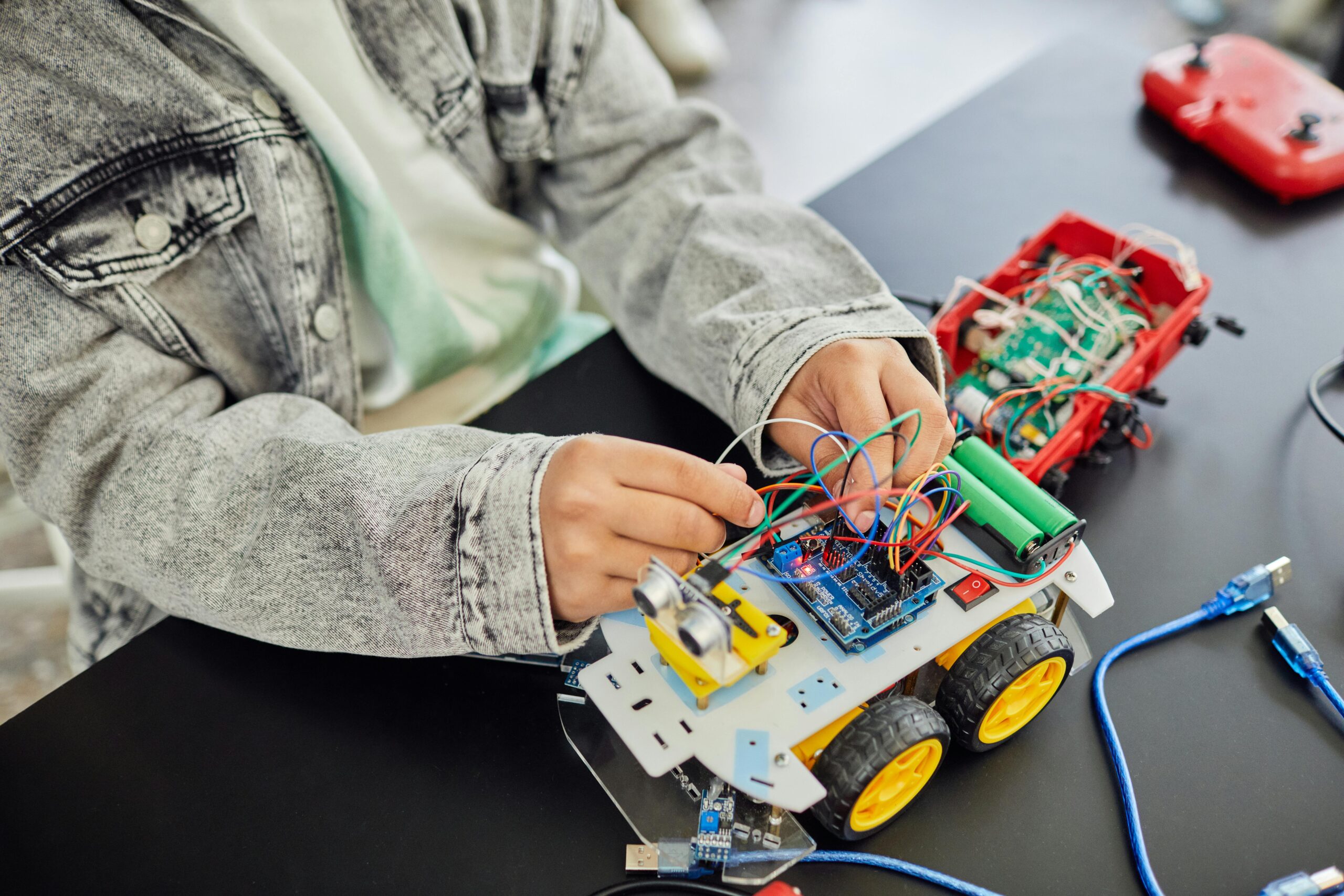
The electronics ecosystem has become remarkably affordable for educational purposes. Arduino-compatible microcontrollers can be purchased for under ten dollars from various online retailers. These boards provide the same learning opportunities as brand-name versions but at a fraction of the cost, making them perfect for classroom sets where multiple units are needed.
Basic electronic components like LEDs, resistors, buttons, and buzzers can be purchased in bulk kits for minimal investment. A comprehensive starter kit containing hundreds of components typically costs less than thirty dollars and can support dozens of student projects. Breadboards for prototyping circuits are reusable and available at very reasonable prices, especially when bought in classroom quantities.
Servo motors and DC motors represent slightly larger investments but remain affordable when sourced from discount electronics suppliers. A basic servo motor suitable for educational projects costs between two and five dollars, while small DC motors can often be salvaged from broken toys or purchased in multi-packs for under ten dollars.
Building Robots With Everyday Household Items
The most innovative robotics programs often emerge from constraints rather than abundance. Encouraging students to see robotic potential in everyday objects develops creative problem-solving skills that commercial kits cannot replicate. Old CDs and DVDs make excellent wheels or rotating platforms, offering smooth surfaces and pre-formed circular shapes perfect for motion-based projects.
Toilet paper rolls and paper towel tubes provide cylindrical structures ideal for robot bodies or arms. These materials cut easily, connect simply, and offer just enough structural integrity for lightweight robotics applications. Aluminum foil can function as both a structural material and a conductor for simple circuit projects, demonstrating dual-purpose thinking in design.
Plastic bottles of various sizes become chassis, containers for electronics, or even buoyancy devices for water-based robots. The variety of bottle shapes available encourages students to match material properties to project requirements. Cardboard egg cartons offer compartmentalized structures perfect for organizing small components or creating segmented robot designs.
Motor Solutions on a Shoestring Budget
Movement defines robotics, but motors can quickly consume a limited budget. Vibration motors salvaged from old cell phones or pagers create simple movement through vibration, perfect for introducing basic concepts of motion without expensive components. These tiny motors can often be obtained for free from electronic waste streams.
Repurposing motors from broken toys provides another cost-effective solution. Thrift stores and garage sales yield treasure troves of battery-operated toys containing perfectly functional motors available for pennies. Teaching students to carefully disassemble these items and harvest usable components instills valuable technical skills while building the parts inventory.
Continuous rotation servos modified from standard servos offer programmable motion control at minimal additional cost. Numerous online tutorials demonstrate the simple modification process, transforming a five-dollar servo into a controllable drive motor. This approach teaches both electronics and mechanical modification skills while maintaining budget constraints.
Free and Low-Cost Programming Platforms 💻
Software costs can derail robotics programs as quickly as hardware expenses, but fortunately, the open-source movement has created exceptional free programming options. The Arduino IDE remains completely free and supports countless microcontroller boards, providing professional-grade development tools without licensing fees. Its extensive community support ensures that students and teachers always have resources for troubleshooting and learning.
Scratch and block-based programming environments offer intuitive entry points for younger students or programming beginners. These visual programming tools eliminate syntax barriers while teaching fundamental computational thinking concepts. Many microcontroller platforms now support Scratch-based programming, bridging the gap between simple drag-and-drop interfaces and physical hardware control.
Python has emerged as an excellent language for robotics education, offering readable syntax and powerful capabilities. MicroPython and CircuitPython bring Python to microcontroller environments, allowing students to learn a professional programming language while controlling hardware. These implementations are free and support increasingly affordable microcontroller boards designed specifically for educational use.
Online Resources That Replace Expensive Curriculum
Commercial robotics curricula can cost thousands of dollars, but equivalent educational content exists freely online. Instructables, YouTube channels dedicated to educational robotics, and GitHub repositories contain thousands of well-documented projects suitable for classroom adaptation. These resources often include step-by-step instructions, code examples, and troubleshooting guidance.
Educational platforms like Tinkercad offer free circuit simulation capabilities, allowing students to design and test circuits virtually before building physical versions. This approach reduces material waste and builds understanding before components are assembled. Khan Academy, Code.org, and similar platforms provide structured programming instruction at no cost, supplementing hands-on robotics activities with foundational computer science education.
Strategic Purchasing: Maximizing Your Limited Budget 🛒
Smart procurement strategies can stretch limited funds significantly further than ad-hoc purchasing. Bulk buying dramatically reduces per-unit costs for consumable items like batteries, wire, and fasteners. Coordinating purchases with other teachers or schools amplifies buying power, accessing volume discounts that individual classrooms cannot achieve alone.
International online marketplaces offer electronics components at substantially lower prices than domestic retailers, though with longer shipping times. Planning purchases well in advance of project needs allows educators to leverage these savings without compromising lesson timing. Many suppliers offer educational discounts that aren’t prominently advertised but become available upon request with documentation of educational use.
End-of-year sales, holiday promotions, and clearance events provide opportunities to acquire materials at deep discounts. Building a reserve inventory during these sales periods ensures component availability when needed while maximizing budget efficiency. Subscribing to newsletters from educational suppliers alerts teachers to special promotions and limited-time offers.
Grant Opportunities and Alternative Funding Sources
Numerous grant programs specifically target STEM education initiatives in schools. DonorsChoose allows teachers to post project requests that individual donors can fund, creating direct connections between classrooms and supporters. Local businesses often maintain community investment programs seeking educational partnerships, particularly in STEM fields where they face talent recruitment challenges.
Parent-teacher organizations frequently prioritize innovative educational programs when allocating funds. Presenting a well-structured robotics proposal with clear learning objectives and budget transparency increases success likelihood. Crowdfunding platforms enable broader community engagement, turning robotics program funding into a community-building exercise that extends beyond the classroom.
STEM-focused nonprofits and foundations regularly offer grants ranging from a few hundred to several thousand dollars. While competitive, these opportunities can transform program capabilities when successfully secured. Investing time in learning effective grant writing pays dividends that extend far beyond single funding cycles.
Collaborative Building: The Library of Things Approach 📚
Sharing resources across classrooms, grade levels, or even schools multiplies the effective budget of each program. Establishing a robotics lending library where materials circulate between teachers ensures consistent utilization while preventing duplicate purchases. One set of oscilloscopes or soldering stations can serve an entire school when properly scheduled and maintained.
Tool-sharing arrangements work particularly well for expensive items used intermittently. Rather than each teacher purchasing individual 3D printers or laser cutters, centralized equipment accessible to all programs provides advanced capabilities at fraction of the per-classroom cost. This approach also creates natural collaboration opportunities between classes working on compatible projects.
Community makerspaces and public libraries increasingly offer access to tools and equipment beyond typical school budgets. Building relationships with these institutions creates pathways for students to access advanced fabrication tools while reinforcing connections between formal education and community resources. Many makerspaces offer educational partnership programs specifically designed to support school STEM initiatives.
Assessment and Iteration Without Additional Costs 🔄
Effective robotics education requires assessing student learning and iterating program design, but these processes need not require additional expenditures. Portfolio-based assessment using photos, videos, and written reflections documents student progress without costly testing materials. Students can maintain digital portfolios using free platforms, creating lasting records of their learning journey.
Peer evaluation and collaborative reflection sessions harness classroom dynamics for assessment purposes while building communication skills. Students learn to give and receive constructive feedback, developing professional skills alongside technical competencies. These assessment approaches often provide richer insight into student understanding than traditional tests while supporting collaborative classroom culture.
Iterative design processes built into projects teach failure as a learning opportunity rather than a setback. When students understand that initial attempts rarely succeed perfectly, material “failures” become educational experiences rather than wasted resources. This mindset shift transforms budget constraints into pedagogical advantages, teaching resilience and creative problem-solving.
Building Sustainable Programs for Long-Term Success 🌱
The most successful budget robotics programs think beyond single-year implementations, building sustainable systems that strengthen over time. Establishing component organization systems using inexpensive storage containers prevents loss and damage, extending material lifespan significantly. Teaching students proper tool care and material handling reduces replacement costs while instilling responsibility.
Creating student mentor programs where experienced participants assist newcomers distributes teaching responsibilities while building leadership skills. Older students helping younger ones reduces teacher workload while creating peer learning opportunities that often prove more effective than adult instruction alone. This approach builds program continuity across grade levels.
Documentation practices ensure that successful projects become repeatable resources rather than one-time achievements. Having students create build guides, instructional videos, or troubleshooting documents generates curriculum materials while developing communication skills. These student-created resources become invaluable assets for future classes, continuously improving program quality without ongoing costs.
When Success Sparks: Growing Beyond Initial Constraints 🚀
Budget-conscious robotics programs often become victims of their own success, generating student enthusiasm that outpaces available resources. This positive problem creates opportunities for program expansion justified by demonstrated impact. Documenting student engagement, learning outcomes, and community interest builds compelling cases for increased funding from administrators, parents, and external supporters.
Competition participation provides goal-oriented focus while potentially accessing new resources. Many robotics competitions offer equipment grants to participating schools or maintain loaner programs for teams lacking resources. The motivation competitions provide often justifies associated costs through increased student engagement and skill development.
Alumni connections can transform into ongoing support networks when former students appreciate their robotics experiences. Graduates entering STEM careers often seek opportunities to give back, providing mentorship, material donations, or financial support. Maintaining these connections creates sustainable support systems that strengthen programs over time.
The journey of building robotics programs on limited budgets teaches lessons extending far beyond technical skills. Students learn resourcefulness, creative problem-solving, and the satisfaction of achieving impressive results despite constraints. These experiences often prove more valuable than those in well-funded programs where solutions can be purchased rather than innovated. Budget limitations become not obstacles to overcome but opportunities to develop the innovative thinking that defines successful engineers, programmers, and problem-solvers in any field.