Creative robotics programs are transforming classrooms worldwide, bridging the gap between theoretical learning and hands-on innovation in ways that inspire students and educators alike.

🤖 The Dawn of Educational Robotics: More Than Just Toys
Educational robotics has evolved far beyond simple programmable toys. Today’s robotics programs represent a comprehensive approach to learning that integrates science, technology, engineering, arts, and mathematics (STEAM) into cohesive, engaging experiences. Schools implementing these programs report dramatic improvements in student engagement, critical thinking skills, and collaborative learning outcomes.
The revolution isn’t just about teaching students to build robots—it’s about fostering creative problem-solving, computational thinking, and resilience in the face of challenges. These programs prepare students for a future where technological literacy isn’t optional but essential.
Brookwood Elementary: From Struggling to Soaring
Located in suburban Atlanta, Brookwood Elementary School faced declining test scores and student disengagement in 2018. The administration made a bold decision to integrate a comprehensive robotics curriculum into their STEM classes, partnering with local tech companies for mentorship and resources.
Within two years, the transformation was remarkable. Students who previously showed little interest in mathematics began staying after school voluntarily to work on robotics projects. The school’s approach centered on student-led inquiry, where learners identified real-world problems and designed robotic solutions.
Key Success Factors at Brookwood
- Administrative support with dedicated funding for equipment and teacher training
- Partnership with Georgia Tech for curriculum development and mentorship
- Integration across multiple subjects, not isolated to technology classes
- Regular showcases where students presented projects to parents and community members
- Emphasis on iterative design—celebrating failures as learning opportunities
The school’s math proficiency rates increased by 23% over three years, but more importantly, student surveys showed a 67% increase in self-reported confidence in problem-solving abilities. Teachers noted that students demonstrated greater persistence when facing difficult challenges across all subject areas.
Singapore’s National Robotics Program: Scaling Success
Singapore took a different approach by implementing robotics education at a national scale. Beginning in 2015, the Ministry of Education launched the Code for Fun programme, reaching over 100,000 students across primary and secondary schools within five years.
The programme’s genius lay in its accessibility. Rather than requiring expensive equipment for every student, Singapore developed a hub model where schools shared resources through regional centers. Students attended intensive workshops during school holidays and integrated what they learned into regular coursework throughout the academic year.
Innovative Elements of Singapore’s Model
The Singapore programme distinguished itself through several innovative features. First, it didn’t treat robotics as an elite activity for gifted students but as fundamental literacy for all. Second, it leveraged online platforms to extend learning beyond physical classrooms, creating virtual communities where students collaborated across schools.
Teacher development was paramount. The Ministry invested heavily in training educators, not just in technical skills but in pedagogical approaches that encouraged student-led exploration. Teachers learned to become facilitators rather than information dispensers, guiding students through discovery rather than dictating solutions.
Assessment methods evolved too. Instead of traditional tests, students demonstrated mastery through project portfolios and presentations. This shift reflected the real-world application of skills rather than rote memorization.
🎓 Rural Innovation: Montana’s Distance Robotics Initiative
Rural schools often face unique challenges—limited resources, difficulty attracting specialized teachers, and geographic isolation. Montana’s Distance Robotics Initiative proved that these barriers weren’t insurmountable when creativity and technology combined effectively.
Launched in 2017, the programme connected twelve rural schools across Montana through a shared robotics curriculum delivered via video conferencing and supplemented with traveling instructors. Each school received a starter robotics kit, and students from different schools formed virtual teams to collaborate on projects.
Overcoming Geographic Barriers
The programme’s coordinator, former engineer Sarah Chen, designed a curriculum that acknowledged rural realities. Projects focused on agricultural applications, environmental monitoring, and solutions to problems rural communities actually faced. Students designed robots to help with cattle monitoring, automated irrigation systems, and wildlife tracking devices.
This contextual relevance proved crucial. Students saw direct connections between their learning and their communities’ needs. One team developed a prototype robot to detect fence breaks on large ranches, potentially saving ranchers thousands of dollars in lost livestock.
The social benefits surprised even the programme’s architects. Students who previously felt isolated from technological innovation discovered peers across the state who shared their interests. Virtual competitions fostered friendly rivalries and lasting friendships. Several participants who graduated have stayed connected, forming informal networks that continue sharing knowledge and supporting each other’s endeavors.
Helsinki’s Arts-Integrated Robotics Curriculum
Finland’s education system consistently ranks among the world’s best, and Helsinki’s robotics programmes reflect the nation’s educational philosophy. Rather than treating robotics as purely technical, Helsinki schools integrated arts and humanities, creating truly interdisciplinary experiences.
At Viikki Elementary, students in a fifth-grade class spent a semester exploring the question: “How can robots help tell our cultural stories?” The resulting projects combined programming, mechanical design, storytelling, music, and visual arts.
When Technology Meets Creativity 🎨
One student team created a robotic shadow puppet theater that automatically performed traditional Finnish folk tales. Another group programmed dancing robots that performed to student-composed music inspired by Kalevala, Finland’s national epic. These projects required students to research cultural heritage, develop narratives, compose music, design mechanical systems, and program complex sequences.
Teachers reported that this approach engaged students who might otherwise disengage from purely technical subjects. The arts integration provided multiple entry points—students could contribute through storytelling, design, programming, or performance, depending on their strengths and interests.
Assessment reflected this holistic approach. Students were evaluated on technical execution, creative vision, cultural understanding, teamwork, and presentation skills. This multifaceted evaluation recognized the diverse talents students brought to projects.
São Paulo’s Community-Centered Robotics Labs
Brazil faced significant educational inequality, with resources concentrated in affluent areas. São Paulo’s Municipal Education Department addressed this by establishing community robotics labs in underserved neighborhoods, free for any young person to attend.
These weren’t school-based programmes but community centers operating evenings and weekends. The model recognized that many students in these neighborhoods faced challenges that made after-school engagement difficult—family responsibilities, part-time work, safety concerns traveling at night.
Building Beyond School Walls
The labs employed local community members as facilitators, providing jobs while ensuring cultural sensitivity and local relevance. Projects addressed neighborhood concerns—students designed robots to help with waste sorting to improve recycling rates, created automated systems to monitor air quality near industrial areas, and built devices to assist elderly neighbors with mobility challenges.
The programme partnered with local universities, bringing engineering students to serve as mentors. This created pathways many participants never imagined—suddenly, university felt accessible rather than impossibly distant. Several lab participants have since enrolled in engineering programmes, the first in their families to attend university.
Funding came from an innovative public-private partnership. Tech companies provided equipment donations and employee volunteers, the municipality covered staffing and facilities, and a social enterprise sold products designed in the labs, creating a sustainable revenue stream.
🔧 Common Threads: What Makes These Programmes Work
Analyzing these diverse case studies reveals common success factors that transcend geography, culture, and educational contexts. Understanding these elements can guide other schools and communities developing their own programmes.
Student Agency and Real-World Relevance
Every successful programme emphasized student choice and connected learning to authentic problems. When students see purpose in their work beyond grades, engagement deepens dramatically. Projects addressing real community needs provided motivation no abstract assignment could match.
Failure as Learning: Embracing Iteration
Traditional education often penalizes mistakes. Successful robotics programmes flipped this script, treating failures as essential data points in the learning process. Students learned that initial attempts rarely work perfectly—refinement through iteration is how innovation happens.
This mindset shift extended beyond robotics. Teachers reported students became more willing to tackle difficult problems in other subjects, less afraid of being wrong, more persistent when solutions weren’t immediately apparent.
Teacher Support and Professional Development
No programme succeeded without substantial teacher investment. Effective professional development didn’t just teach technical skills—it helped educators reimagine their roles as learning facilitators. Teachers needed time to experiment, permission to learn alongside students, and ongoing support as they navigated unfamiliar territory.
Measuring Success: Beyond Test Scores
Traditional metrics often fail to capture robotics programmes’ full impact. While standardized test improvements matter to administrators and policymakers, the most profound changes often appear in harder-to-quantify areas.
Schools reported improvements in student collaboration skills, with students learning to negotiate roles, resolve conflicts constructively, and leverage diverse team member strengths. Communication skills developed as students explained technical concepts to peers, presented projects to audiences, and documented their work.
Long-Term Outcomes Worth Tracking 📊
| Metric | How to Measure | Why It Matters |
|---|---|---|
| Student persistence | Time spent on challenging problems before seeking help | Indicates resilience and problem-solving confidence |
| Cross-discipline application | Transfer of skills to other subjects | Shows genuine learning versus isolated skill development |
| Career pathway influence | Post-secondary choices and career directions | Demonstrates long-term programme impact |
| Community engagement | Parent involvement, community partnerships formed | Reflects programme relevance beyond classroom |
Challenges and Honest Limitations
Success stories inspire, but honest discussion of challenges provides valuable guidance for future implementations. Even the most successful programmes faced significant obstacles.
Funding remains perpetually challenging. Initial grants launch programmes, but sustainable funding requires creative solutions—partnerships, fundraising, budget reallocation from less effective initiatives. Equipment costs decrease over time, but maintenance, updates, and replacements require ongoing resources.
Equity Concerns Require Vigilance
Without intentional equity focus, robotics programmes can inadvertently widen achievement gaps. Students from families with resources may have prior exposure to technology, coding, or engineering concepts, giving them advantages that compound over time. Successful programmes actively counteracted this through scaffolded instruction, peer mentoring, and ensuring diverse project roles where different skills contributed equally to success.
Gender disparities persist in many technology fields, and robotics programmes must actively work against stereotypes rather than passively hope for diversity. Successful programmes featured diverse role models, highlighted women and minorities in technology fields, used inclusive language and examples, and monitored participation data to identify and address imbalances early.
🚀 Looking Forward: The Next Generation of Educational Robotics
These case studies represent early chapters in educational robotics’ evolution. Emerging trends suggest exciting developments ahead as technology advances and pedagogy evolves.
Artificial intelligence integration allows robots to exhibit more complex behaviors, raising fascinating questions about programming, ethics, and human-machine collaboration. Students grapple with questions previous generations never encountered—what responsibilities do we have toward intelligent machines? How do we ensure AI systems reflect our values?
Accessibility Revolution
Costs continue decreasing while capabilities increase. Open-source platforms democratize access to sophisticated tools previously available only to well-funded institutions. Virtual and augmented reality technologies allow students to design and test robotic systems before building physical prototypes, reducing material costs while expanding creative possibilities.
Cloud-based collaboration tools enable global partnerships, with students from different continents working together on shared projects. This global dimension adds cultural learning to technical education, preparing students for increasingly interconnected world.
Implementation Roadmap: Starting Your Own Programme
For educators and administrators inspired to launch robotics programmes, these case studies offer practical guidance. Success doesn’t require replicating any single model but adapting proven principles to local contexts.
Start small with pilot programmes before scaling up. Identify enthusiastic teachers willing to experiment and learn alongside students. Build community partnerships early—local businesses, universities, and makerspaces often eagerly support educational initiatives. Focus on problems students care about, ensuring relevance drives engagement.
Essential First Steps
- Form a planning team including teachers, students, parents, and community members
- Research available curricula and platforms to find best fits for your context
- Identify funding sources—grants, partnerships, budget reallocation
- Develop assessment approaches aligned with programme goals
- Create professional development plans for participating educators
- Establish metrics to track progress and guide improvements
- Plan for sustainability beyond initial enthusiasm and funding
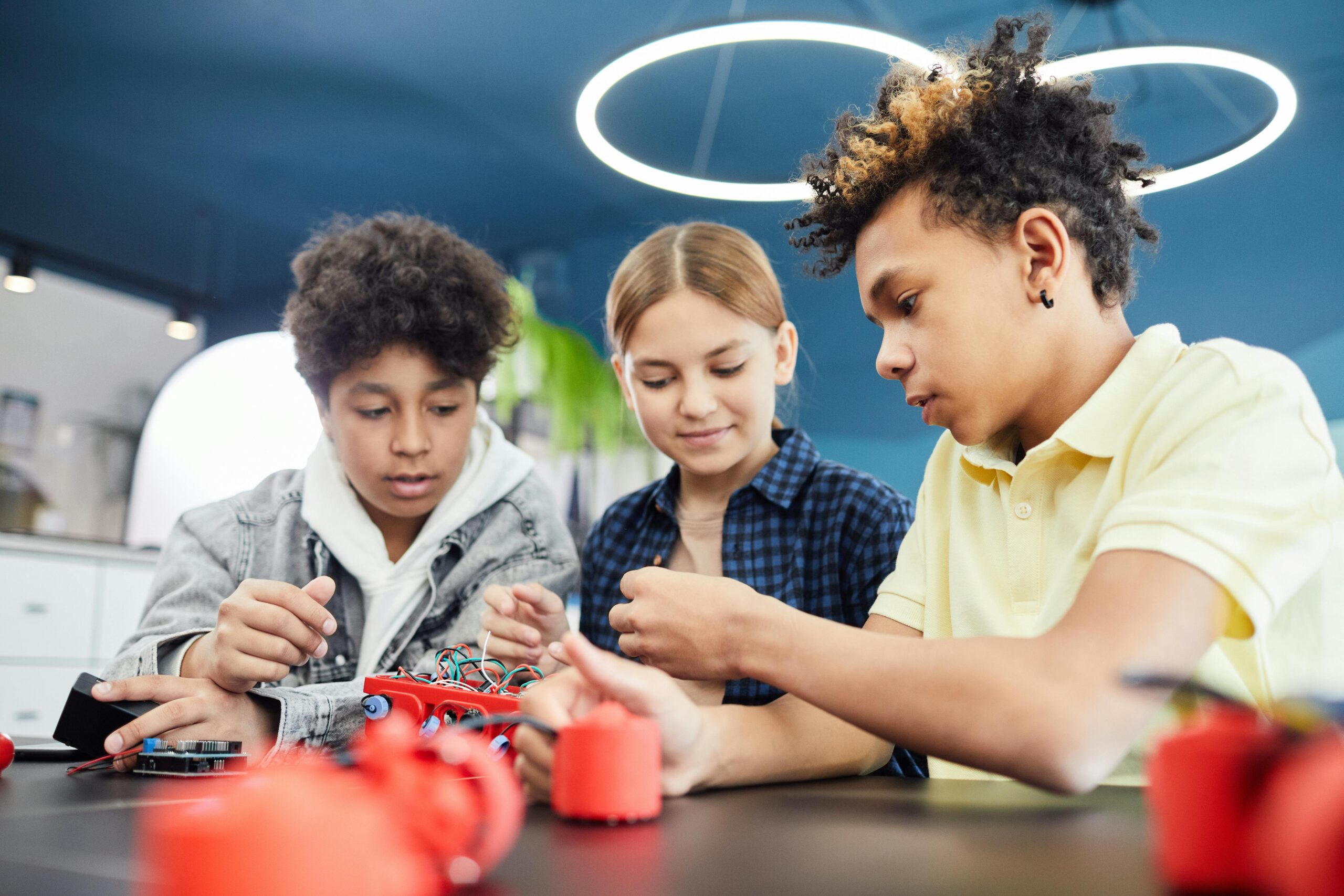
Transforming Education One Robot at a Time
The case studies explored here demonstrate that creative robotics programmes succeed across vastly different contexts when guided by sound principles—student agency, real-world relevance, supportive learning environments, and equity-conscious implementation. These programmes transform not just what students learn but how they learn and perceive themselves as learners.
From Atlanta to Singapore, Montana to São Paulo, educators are discovering that robotics provides powerful vehicles for developing the skills students need for uncertain futures—creativity, collaboration, critical thinking, and resilience. The technology matters less than the learning experiences it enables.
As these programmes mature and evolve, they’re proving that education’s future isn’t about replacing human teachers with machines but empowering students and educators to use technology as a tool for exploration, expression, and innovation. The revolution in education isn’t coming—it’s already here, being built one creative robotics programme at a time. 🌟