Math doesn’t have to be confined to textbooks and worksheets anymore. RoboMath combines robotics with mathematical concepts, transforming abstract numbers into tangible, interactive experiences that students can see, touch, and program. 🤖

Why Robotics and Math Make the Perfect Learning Duo
The integration of robotics into mathematics education represents a revolutionary approach to learning. When students engage with robots, they’re not just manipulating toys—they’re applying geometric principles, calculating distances, measuring angles, and solving real-world problems. This hands-on methodology addresses one of education’s biggest challenges: making abstract mathematical concepts concrete and relatable.
Research consistently shows that students retain information better when they can physically interact with learning materials. Robotics projects provide immediate feedback, allowing learners to see the consequences of their mathematical calculations in real-time. If a robot doesn’t navigate correctly, students must revisit their calculations, fostering critical thinking and problem-solving skills that extend far beyond mathematics.
Moreover, robotics naturally incorporates multiple mathematical domains simultaneously. A single project might involve geometry for navigation, algebra for programming variables, statistics for sensor data analysis, and trigonometry for calculating angles. This interdisciplinary approach mirrors how mathematics functions in professional fields, preparing students for real-world applications.
Essential Mathematical Concepts Taught Through Robotics 📐
Robotics projects can effectively teach virtually every mathematical concept from elementary through advanced levels. The key lies in designing age-appropriate challenges that align with curriculum standards while maintaining engagement and excitement.
Geometry Comes Alive with Robot Navigation
When programming a robot to navigate a maze or follow a specific path, students engage directly with geometric principles. They calculate distances using units of measurement, determine angles for turns, and visualize shapes and spatial relationships. A simple challenge like creating a square path requires understanding that four 90-degree turns with equal distances between them form a closed shape—a concept that becomes immediately tangible when the robot traces it physically.
Advanced geometry concepts like coordinate planes, vectors, and transformations become equally accessible. Students can program robots to move to specific coordinates, understanding how x and y values translate to physical positions. Rotation matrices stop being intimidating when students see their robot pivot based on mathematical transformations they’ve coded themselves.
Algebra Through Programming Logic
Every robotics program involves variables, expressions, and equations—the fundamental components of algebra. When students create a variable to store a robot’s speed or use equations to calculate stopping distances, they’re practicing algebraic thinking in a meaningful context. The abstract “x” becomes a real parameter that controls observable behavior.
Functions and algorithms take on new meaning when they control a physical device. Students learn that efficient code requires optimization—the same principle behind simplifying algebraic expressions. They discover that testing different values (solving for variables) produces different robot behaviors, making the connection between mathematical theory and practical outcomes crystal clear.
Data Analysis and Statistics in Sensor Readings
Modern educational robots come equipped with various sensors—light sensors, distance sensors, gyroscopes, and accelerometers. These sensors generate continuous data streams that provide perfect opportunities for statistical analysis. Students can collect data, calculate means and medians, identify outliers, and create graphs to visualize sensor readings.
A project measuring how sensor accuracy varies with distance introduces concepts like margin of error, standard deviation, and confidence intervals. Students might program their robot to take multiple readings and calculate averages, understanding why repeated measurements improve accuracy—a fundamental principle in both mathematics and scientific methodology.
Beginner-Friendly RoboMath Projects to Start Today 🚀
Starting with robotics doesn’t require expensive equipment or advanced programming knowledge. Several accessible projects can introduce mathematical concepts through robotics at various skill levels.
The Shape Tracer Challenge
This foundational project asks students to program a robot to trace different geometric shapes. Starting with squares and rectangles, they progress to triangles, pentagons, hexagons, and eventually circles. Each shape requires calculating the appropriate angles and distances, directly applying geometric formulas.
For squares, students discover that four 90-degree turns with equal forward movements create the shape. Triangles introduce the concept that interior angles must sum to 180 degrees. Regular polygons teach the formula for interior angles: (n-2) × 180 / n, where n represents the number of sides. Circles challenge students to approximate curves using many small straight segments—an introduction to limits and calculus concepts.
Distance and Speed Calculator
This project focuses on the relationship between distance, speed, and time—the foundation of kinematics. Students program their robot to travel specific distances at controlled speeds, then measure actual performance against predictions. This introduces measurement precision, unit conversion, and error analysis.
Advanced variations incorporate acceleration and deceleration, requiring students to work with quadratic equations. They might calculate braking distances or determine optimal speeds for energy efficiency, connecting mathematical concepts to practical considerations like battery life and power consumption.
The Maze Navigator
Maze navigation combines multiple mathematical concepts: spatial reasoning, algorithmic thinking, and optimization. Students must program robots to find their way through increasingly complex mazes, applying problem-solving strategies that mirror mathematical proofs.
Simple wall-following algorithms introduce conditional logic and decision trees. More sophisticated approaches like the Pledge algorithm or Trémaux’s algorithm demonstrate how mathematical frameworks solve seemingly complex problems through systematic application of rules. Students learn that elegant mathematical solutions often outperform brute-force approaches.
Intermediate Projects for Deeper Mathematical Exploration 📊
Once students master basics, intermediate projects introduce more sophisticated mathematical concepts while building on foundational skills.
Coordinate Plane Adventures
Transform your classroom floor into a giant coordinate plane where robots navigate to specific points. Students input coordinates, and their robots must calculate the correct heading and distance to reach the destination. This project reinforces coordinate geometry, distance formulas, and trigonometric functions.
The distance formula d = √[(x₂-x₁)² + (y₂-y₁)²] becomes immediately relevant when calculating how far the robot must travel. The arctangent function determines the heading angle: θ = arctan[(y₂-y₁)/(x₂-x₁)]. Students see these abstract formulas produce real movement, cementing understanding through application.
Line Following with PID Controllers
Proportional-Integral-Derivative (PID) controllers represent advanced mathematical concepts applied to real-world control systems. Programming a robot to smoothly follow a line requires understanding rates of change, integration, and feedback loops—concepts from calculus and differential equations made accessible through robotics.
Students adjust three coefficients that control how aggressively the robot corrects its course. The proportional component responds to current error, the integral component accounts for accumulated past errors, and the derivative component predicts future error based on the rate of change. Tuning these values teaches mathematical optimization in a tangible, iterative way.
Collision Avoidance Through Geometry
Programming robots to navigate environments while avoiding obstacles requires geometric reasoning and spatial mathematics. Students must calculate safe approach distances, determine alternate paths, and optimize routes—all fundamental applications of geometric principles and graph theory.
This project can incorporate vector mathematics, where the robot’s intended direction is represented as a vector, and obstacles exert repulsive “forces” (vectors) that alter the path. Summing these vectors produces a new trajectory, demonstrating vector addition in a physical context.
Advanced RoboMath: Where Robotics Meets Higher Mathematics 🎯
Advanced students can explore sophisticated mathematical concepts through complex robotics challenges that mirror professional engineering applications.
Inverse Kinematics for Robotic Arms
Robotic arms introduce inverse kinematics—calculating joint angles needed to position an end effector at specific coordinates. This requires solving systems of trigonometric equations, often with multiple valid solutions. Students apply trigonometric identities, work with matrices for transformations, and understand the difference between solvable and unsolvable positions.
The mathematics becomes challenging but rewarding. Students might use the law of cosines to calculate joint angles or employ Jacobian matrices for more sophisticated control. These concepts, typically reserved for university-level engineering courses, become accessible when students see their calculations translate into precise robotic movements.
Simultaneous Localization and Mapping (SLAM)
SLAM challenges robots to create maps of unknown environments while tracking their own position—a problem requiring advanced probability theory, linear algebra, and computational geometry. While full SLAM implementations exceed most classroom capabilities, simplified versions introduce these concepts effectively.
Students learn about uncertainty in measurements, represented mathematically through probability distributions. They discover how Bayesian inference updates position estimates based on new sensor data, combining prior knowledge with observations. These concepts bridge mathematics, computer science, and robotics in sophisticated ways.
Swarm Robotics and Distributed Algorithms
Multiple robots working together introduce collective behavior and distributed systems. Students explore how simple mathematical rules produce complex emergent behaviors. Flocking algorithms, formation control, and collaborative task completion all require mathematical modeling and analysis.
Graph theory becomes essential when robots communicate and coordinate. Students might design communication protocols, optimize task allocation, or program synchronized movements—all requiring mathematical frameworks to ensure coherent collective behavior.
Creating Your RoboMath Learning Environment 🏫
Successfully implementing robotics-based mathematics education requires thoughtful preparation and resource allocation. The good news is that options exist for virtually every budget and experience level.
Selecting Appropriate Robot Platforms
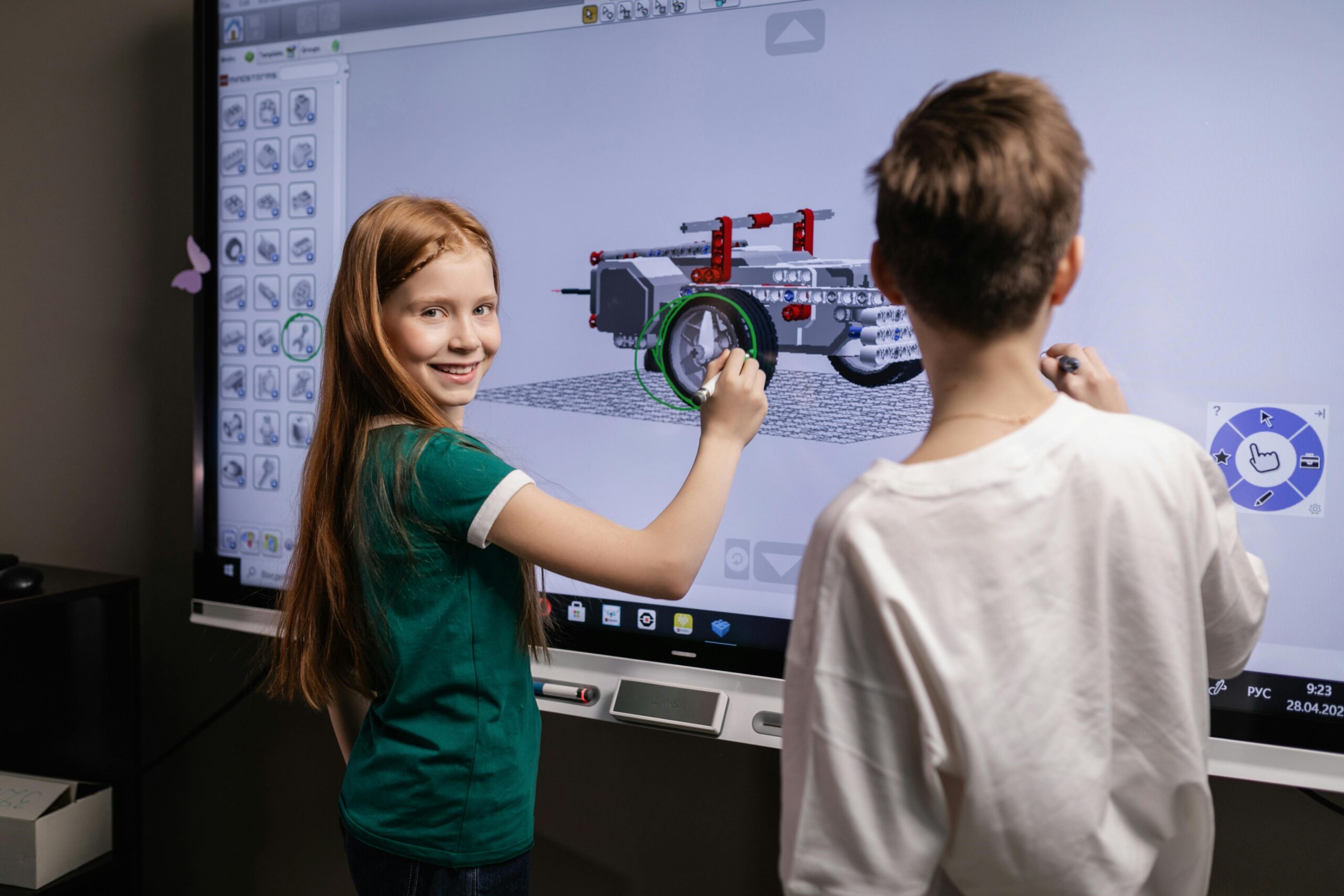
Numerous educational robot platforms cater to different age groups and skill levels. LEGO Mindstorms and SPIKE Prime offer intuitive building systems with graphical programming interfaces suitable for younger students. VEX Robotics provides more sophisticated options for middle and high school students ready for text-based programming.
Arduino-based robots offer maximum flexibility at lower cost, though they require more technical expertise to set up. Raspberry Pi robots introduce Linux computing alongside robotics. The best choice depends on student age, available budget, existing technical infrastructure, and learning objectives.
Programming Environments and Mathematical Tools
Block-based programming environments like Scratch, Blockly, and LEGO’s proprietary software provide gentle introductions to programming logic without syntax concerns. As students advance, transitioning to Python or C++ introduces text-based coding while maintaining accessibility.
Python particularly excels for RoboMath projects due to extensive libraries for mathematical computation, data visualization, and robot control. Students can use NumPy for numerical calculations, Matplotlib for graphing sensor data, and various robotics libraries for hardware control—all within a single, relatively approachable language.
Structuring Effective RoboMath Lessons
Effective RoboMath lessons balance mathematical instruction with hands-on robotics exploration. Begin with clear learning objectives tied to specific mathematical standards. Introduce the mathematical concept through traditional instruction, then immediately apply it through a robotics challenge.
The iterative design process mirrors mathematical problem-solving: define the problem, develop a hypothesis (solution approach), test it, analyze results, and refine. This cycle teaches persistence and the understanding that mistakes are learning opportunities—valuable lessons that extend far beyond mathematics or robotics.
Assessing Mathematical Learning Through Robotics Projects 📝
Assessment in RoboMath environments should evaluate both mathematical understanding and application skills. Traditional tests can measure conceptual knowledge, but authentic assessment through project performance provides deeper insight into student learning.
Performance-based assessments might evaluate how accurately a robot completes a mathematical challenge, the efficiency of the solution, and the student’s ability to explain the mathematical reasoning behind their approach. Documentation requirements—having students write explanations of their calculations and problem-solving processes—reinforce mathematical communication skills.
Rubrics should assess multiple dimensions: mathematical accuracy, code efficiency, creativity in problem-solving, collaboration with teammates, and ability to troubleshoot and iterate. This comprehensive approach recognizes that STEM learning involves both conceptual understanding and practical application.
Overcoming Common Challenges in RoboMath Implementation 💡
Despite its benefits, implementing robotics-based mathematics education presents challenges. Technical difficulties, resource constraints, and varying student preparedness require strategic solutions.
Technical issues are inevitable when working with physical devices. Building a culture where troubleshooting is part of learning helps students develop resilience. Creating troubleshooting guides, establishing peer support systems, and maintaining spare parts minimize disruption from technical problems.
Limited budgets need not prevent implementation. Starting small with one or two robot kits, rotating groups through robotics stations, or implementing virtual robotics simulators provides exposure without massive investment. Grant funding, community partnerships, and crowdfunding campaigns can supplement school budgets.
Varied student preparation levels require differentiated instruction. Offering projects with multiple entry points—basic challenges for beginners alongside advanced extensions—ensures all students remain engaged at appropriate difficulty levels. Pairing experienced students with novices through structured peer mentoring benefits both groups.
The Future of Learning: Where RoboMath Takes Us Next 🌟
RoboMath represents more than an innovative teaching methodology—it’s a glimpse into education’s future. As automation and artificial intelligence increasingly shape our world, understanding the mathematical principles that govern these technologies becomes essential literacy, not optional enrichment.
Students engaged in robotics projects develop computational thinking skills that transfer across domains. They learn to decompose complex problems into manageable components, recognize patterns, create algorithms, and test solutions iteratively. These skills prove valuable whether students pursue STEM careers or apply logical thinking to entirely different fields.
Beyond academic skills, RoboMath cultivates important dispositions: curiosity, persistence, creativity, and collaborative problem-solving. Students learn that challenges have multiple solutions and that learning from failure is essential to success. These lessons about growth mindset and perseverance may ultimately prove more valuable than any specific mathematical concept.
The integration of robotics into mathematics education transforms passive learning into active discovery. Students stop asking “When will I ever use this?” because they’re already using mathematics in engaging, meaningful ways. They experience firsthand how mathematical concepts enable them to control, create, and innovate—powerful motivators for continued learning.
RoboMath bridges the gap between abstract mathematical theory and concrete application, making mathematics accessible, relevant, and exciting. Whether tracing geometric shapes, navigating coordinate planes, or programming sophisticated control algorithms, students engaged in robotics projects develop both mathematical competence and confidence. This approach doesn’t just teach mathematics—it inspires a generation of creative problem-solvers ready to tackle tomorrow’s challenges with mathematical thinking and technological tools. The future of mathematics education is interactive, engaging, and remarkably fun—and it’s already being built, one robot at a time.