
Creative robotics is transforming education by blending hands-on learning with cutting-edge technology, fostering innovation, problem-solving skills, and preparing students for future careers in unprecedented ways.

🤖 The Revolutionary Intersection of Robotics and Education
In an era where technological literacy has become as fundamental as reading and writing, creative robotics emerges as a powerful catalyst for educational transformation. This innovative approach to learning transcends traditional classroom boundaries, offering students tangible experiences with concepts that once seemed abstract or inaccessible. By integrating robotics into educational curricula, educators are witnessing remarkable improvements in student engagement, retention rates, and practical skill development.
The beauty of creative robotics lies in its multidisciplinary nature. Students don’t simply learn to build robots; they engage with mathematics, physics, engineering, computer science, art, and design simultaneously. This holistic approach mirrors real-world problem-solving scenarios, where professionals must draw from multiple knowledge domains to create effective solutions. As students navigate the challenges of programming a robot to complete specific tasks or designing mechanical components that work harmoniously, they develop cognitive flexibility and adaptive thinking patterns that serve them throughout their lives.
Building Bridges Between Theory and Practice
One of the most significant advantages of incorporating creative robotics into learning environments is the immediate connection it creates between theoretical knowledge and practical application. Students who might struggle with abstract mathematical concepts suddenly understand their relevance when calculating the trajectory of a robotic arm or programming movement algorithms. Physics principles come alive when students must account for friction, momentum, and force distribution in their robot designs.
This experiential learning approach addresses a critical gap in traditional education systems. Too often, students memorize formulas and facts without truly understanding their practical implications or real-world applications. Creative robotics transforms this dynamic entirely. When a student’s robot fails to complete a task, they immediately receive feedback about their design or programming choices, prompting critical analysis and iterative improvement—skills that are invaluable in any professional field.
The Power of Immediate Feedback Loops ⚡
Unlike conventional testing methods that may take days or weeks to provide results, robotics projects offer instant feedback. A malfunctioning program or mechanical design reveals itself immediately when the robot fails to perform as expected. This rapid feedback cycle encourages students to adopt a growth mindset, viewing failures not as endpoints but as valuable learning opportunities. They learn to troubleshoot, debug, and refine their work systematically—competencies that extend far beyond robotics into every aspect of academic and professional life.
Cultivating Essential 21st Century Skills
The modern workplace demands a unique combination of technical expertise, creative thinking, and collaborative abilities. Creative robotics programs naturally cultivate all these essential competencies simultaneously. As students work on robotics projects, they develop a robust skill set that employers across industries increasingly value.
Computational Thinking and Problem-Solving
Robotics challenges students to break down complex problems into manageable components, identify patterns, abstract essential features, and design step-by-step solutions—the core elements of computational thinking. These cognitive processes aren’t limited to computer science; they’re applicable to medical diagnosis, business strategy, urban planning, and countless other fields. By regularly engaging in robotics projects, students internalize these problem-solving frameworks, making them instinctive rather than deliberate.
Collaboration and Communication Skills
Most robotics projects involve teamwork, requiring students to communicate technical concepts clearly, negotiate design decisions, delegate responsibilities, and integrate diverse perspectives. These collaborative experiences teach students to appreciate different thinking styles and skill sets, preparing them for the interdisciplinary team environments they’ll encounter in their careers. The best robotics teams learn that combining a programmer’s logic with a designer’s creativity produces superior results compared to either skill set alone.
From Classroom to Career: Real-World Applications 🚀
The skills students develop through creative robotics programs translate directly into career readiness across multiple industries. Manufacturing, healthcare, transportation, agriculture, entertainment, and countless other sectors increasingly rely on robotics and automation technologies. Students with robotics experience possess not only technical knowledge but also the problem-solving mindset and adaptability that employers desperately seek.
Beyond direct robotics careers, the competencies developed through these programs—analytical thinking, persistence, technical communication, and creative problem-solving—prove valuable in virtually any professional path. A student who learned to debug robot code develops debugging skills applicable to business processes. One who designed mechanical systems gains insight into systems thinking relevant to organizational management. The transferability of these skills makes creative robotics education a wise investment regardless of students’ ultimate career choices.
Inspiring the Next Generation of Innovators
Perhaps most importantly, creative robotics programs ignite passion for science, technology, engineering, and mathematics (STEM) fields among students who might otherwise never discover their aptitude or interest. When students successfully program a robot to navigate an obstacle course or design a mechanical gripper that solves a specific problem, they experience authentic achievement that builds confidence and curiosity. This early engagement with technology often plants seeds that blossom into lifelong pursuits and meaningful careers.
Designing Effective Robotics Learning Experiences
Not all robotics programs deliver equally impressive results. The most effective creative robotics initiatives share several key characteristics that maximize learning outcomes and student engagement. Understanding these elements helps educators, administrators, and parents make informed decisions when selecting or developing robotics programs.
Accessibility and Inclusivity First 🌈
Excellent robotics programs remove barriers to entry, ensuring that students from diverse backgrounds and varying skill levels can participate meaningfully. This might involve offering different challenge levels within the same project, providing multiple entry points to complex concepts, or using robotics platforms with intuitive interfaces alongside more advanced options. The goal is creating an environment where every student experiences success while being appropriately challenged.
Gender inclusivity deserves particular attention in robotics education. Historically, technical fields have struggled with gender imbalance, but creative robotics programs that emphasize design, storytelling, and real-world applications alongside technical skills successfully attract diverse participation. When robotics projects connect to students’ interests and values—such as designing robots that address environmental challenges or assist people with disabilities—engagement spans all demographics.
Project-Based Learning Methodologies
The most impactful robotics programs center on authentic, open-ended projects rather than following rigid, step-by-step instructions. While guided tutorials have their place, particularly for beginners, students develop deeper understanding when they must define problems, generate solutions, test hypotheses, and refine their work based on results. This project-based approach mirrors professional practice and generates the kind of lasting learning that standardized testing rarely captures.
Measuring Success Beyond Competition Trophies 🏆
While robotics competitions provide exciting showcases for student work and can motivate participants, the true value of creative robotics education extends far beyond competition results. Educators and parents should recognize and celebrate the diverse forms of success these programs generate.
Academic improvements often manifest across multiple subjects as students develop stronger analytical and mathematical skills through robotics work. Teachers frequently report that students engaged in robotics programs demonstrate increased persistence when facing difficult problems in other classes, having internalized the iterative improvement mindset that robotics projects require. Additionally, students often show improved spatial reasoning, logical thinking, and technical communication abilities.
Social-Emotional Growth
Creative robotics programs also nurture crucial social-emotional competencies. Students build resilience as they work through inevitable failures and setbacks in their projects. They develop self-efficacy through authentic achievement and recognition. Collaborative robotics work builds empathy as students learn to appreciate teammates’ perspectives and contributions. These personal growth dimensions often prove more valuable than any technical skill, as they form the foundation for lifelong learning and well-being.
Overcoming Common Implementation Challenges
Despite the compelling benefits of creative robotics education, schools and organizations face legitimate obstacles when implementing these programs. Addressing these challenges proactively increases the likelihood of sustainable, successful robotics initiatives.
Budget Constraints and Resource Allocation 💰
Robotics equipment can represent a significant investment, particularly for under-resourced schools. However, creative solutions exist. Many excellent educational robotics platforms offer affordable starter kits, and open-source hardware options provide even more budget-friendly alternatives. Grant programs, community partnerships, and corporate sponsorships can help offset costs. Additionally, a single set of robotics equipment can serve multiple classes throughout the academic year when scheduling is managed thoughtfully.
Teacher Training and Confidence
Many educators feel intimidated by robotics, believing they lack the necessary technical expertise. Addressing this concern requires comprehensive professional development that emphasizes pedagogical approaches rather than expecting teachers to become robotics experts overnight. The most effective model positions teachers as co-learners alongside students, facilitating discovery rather than delivering predetermined knowledge. This approach actually enhances learning by modeling authentic problem-solving processes and demonstrating that not knowing something isn’t failure—it’s an opportunity.
The Future Landscape of Robotics Education 🔮
As technology continues evolving at breakneck speed, creative robotics education must adapt to remain relevant and effective. Several emerging trends promise to enhance robotics learning experiences in coming years.
Artificial intelligence integration represents one significant development. As AI becomes more accessible, students will increasingly incorporate machine learning and computer vision into their robotics projects, opening new possibilities for sophisticated, adaptive robot behaviors. This evolution will require updating curricula and professional development to ensure educators can guide students through these advanced concepts appropriately.
Virtual and augmented reality technologies also show promise for enhancing robotics education. Students might design robots in virtual environments before building physical prototypes, reducing material costs and iteration time. Augmented reality could overlay programming logic onto physical robots, making abstract code more concrete and understandable for beginners.
Expanding Access Through Digital Platforms
Online learning platforms and remote collaboration tools make robotics education increasingly accessible to students in remote areas or situations where in-person instruction isn’t feasible. While hands-on physical construction remains valuable, sophisticated simulation environments allow students to design, program, and test virtual robots that behave according to realistic physics principles. These digital tools supplement rather than replace physical robotics work, expanding opportunities for exploration and learning.
Creating Lasting Educational Impact
The ultimate measure of creative robotics education’s value lies in its lasting impact on students’ lives. When implemented thoughtfully, these programs don’t just teach technical skills—they transform how students approach challenges, view their own capabilities, and imagine their futures. Students who engage deeply with robotics often report that these experiences fundamentally changed their academic trajectories and career aspirations.
The confidence students gain from successfully completing complex robotics projects extends into other areas of their lives. They approach difficult coursework with greater determination, knowing they possess the problem-solving skills to work through obstacles. They’re more willing to take intellectual risks and explore unfamiliar subjects. Perhaps most importantly, they develop an identity as capable, creative problem-solvers—a self-concept that opens doors throughout their lives.
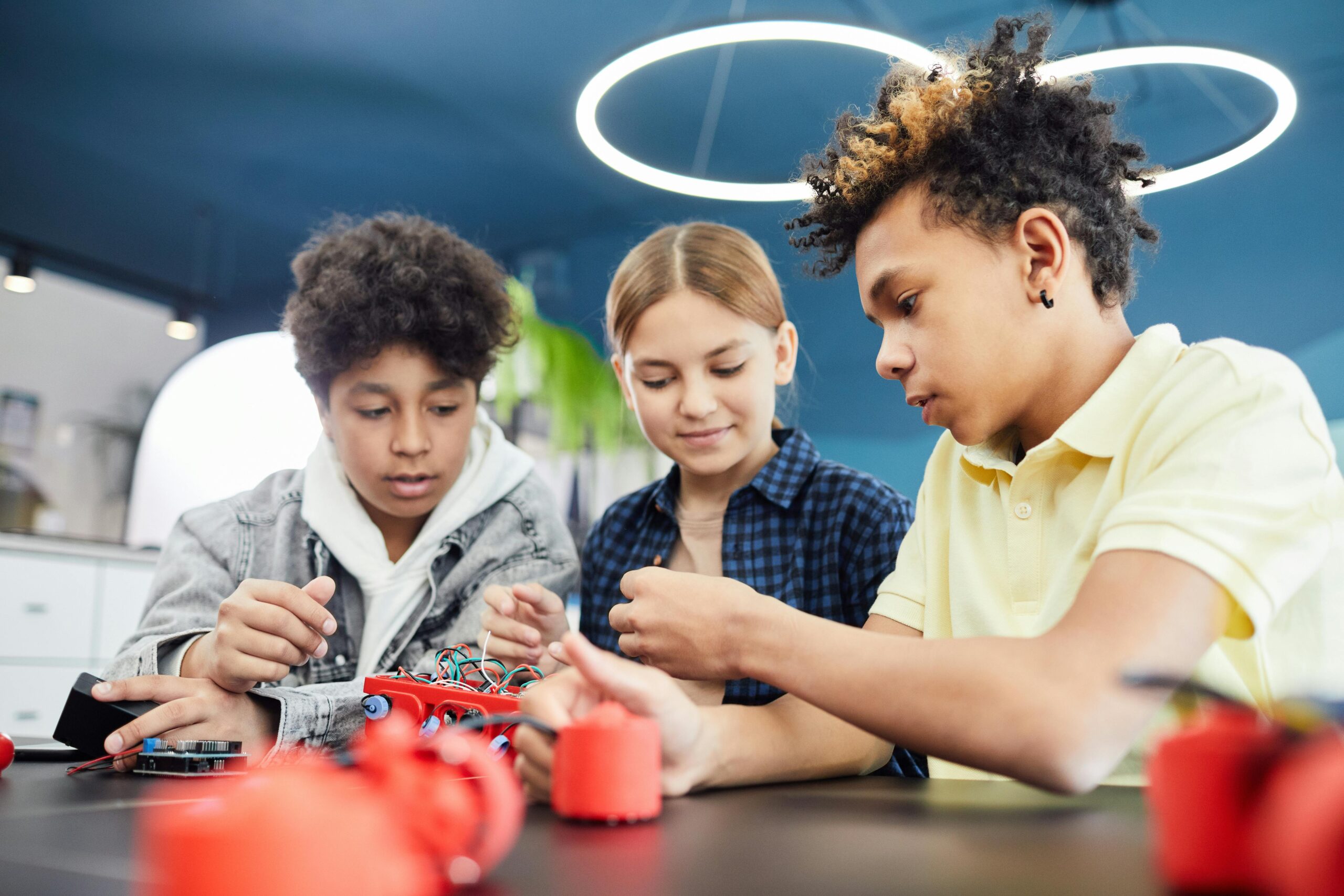
Making Robotics Education Work for Every Student 🎯
The true potential of creative robotics education is realized when programs reach beyond the students who naturally gravitate toward technical subjects. Truly transformative robotics initiatives engage diverse learners, including those who might initially doubt their technical abilities or interest in STEM fields.
This requires intentional design that connects robotics projects to varied interests and values. Environmental science students might design robots that monitor pollution levels. Art students could create kinetic sculptures incorporating robotics. Social justice-minded students might develop assistive technologies for people with disabilities. By framing robotics as a tool for achieving diverse goals rather than an end unto itself, educators expand participation and demonstrate technology’s role as a means of positive impact.
The investment in creative robotics education pays dividends far beyond individual student success. As more young people develop technical literacy, creative problem-solving abilities, and confidence in their capacity to shape technology rather than merely consume it, society benefits from a more capable, innovative, and empowered citizenry. In an increasingly automated world, ensuring the next generation can not only adapt to but actively shape technological change isn’t optional—it’s essential. Creative robotics education provides one of the most effective pathways to achieving this critical goal, unlocking human potential one student, one project, one breakthrough at a time.